


Quick Answer
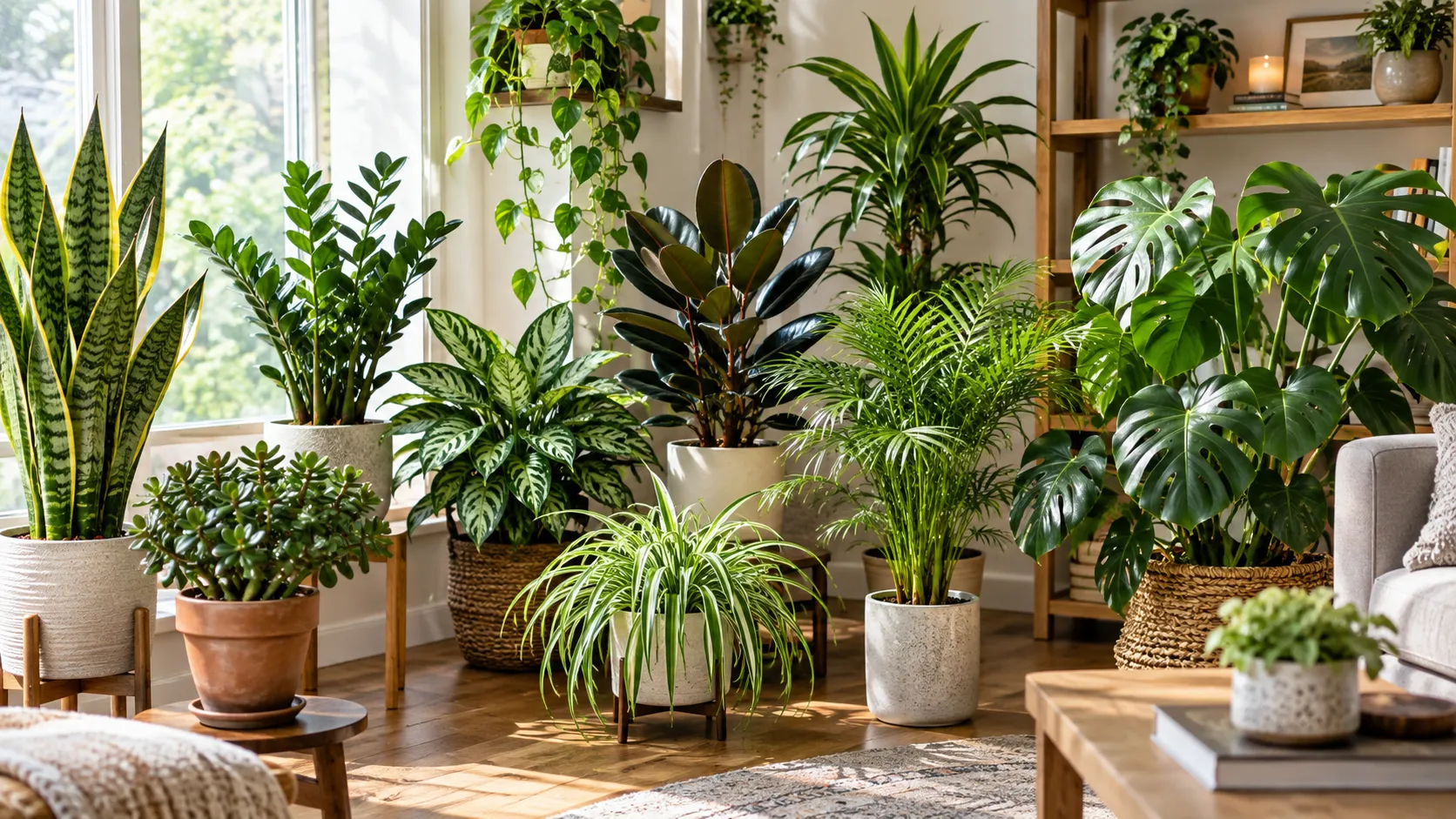
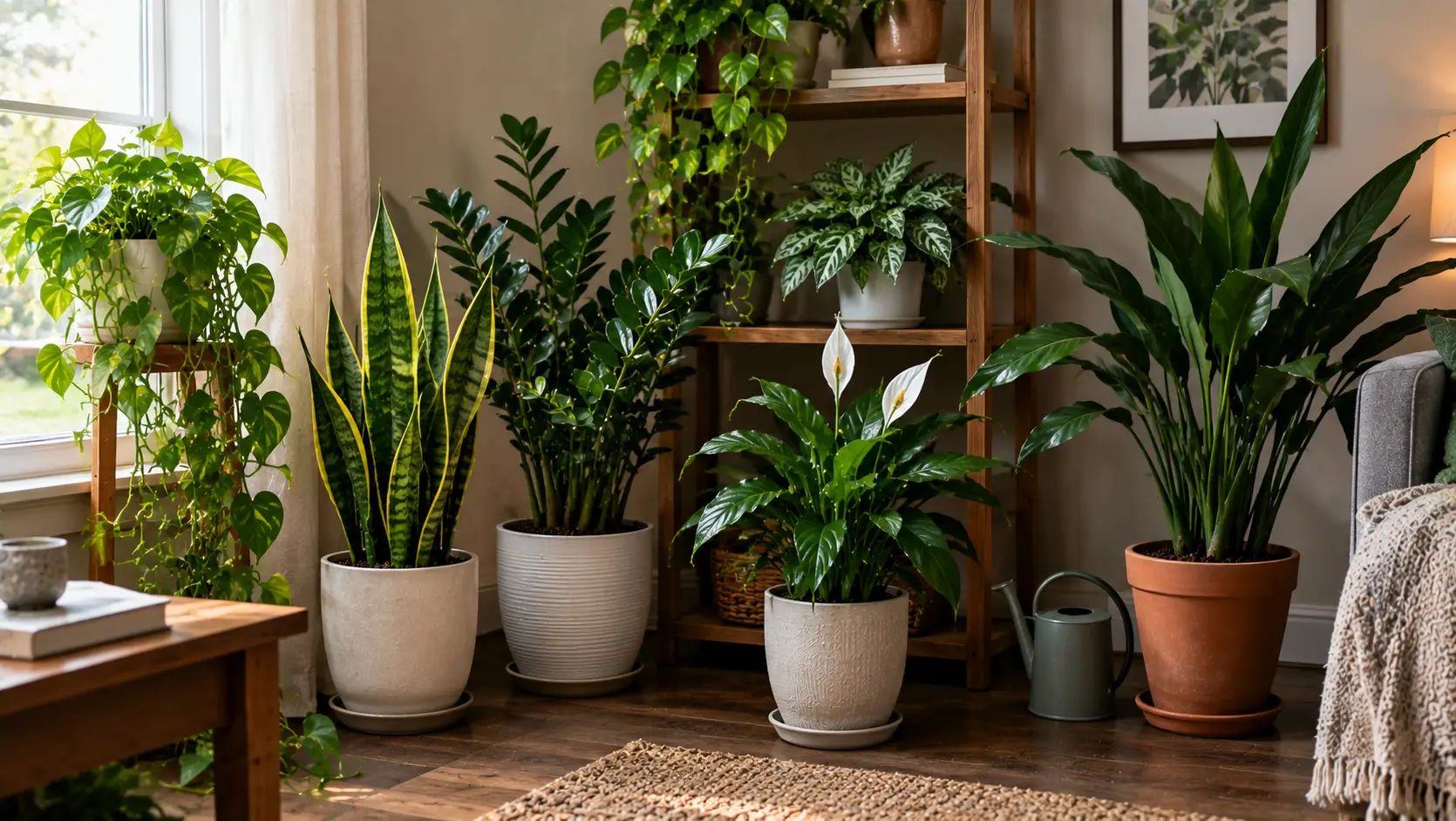
Indoor gardening for beginners comes down to 3 things: matching plants to the light you actually have, watering based on soil condition instead of a fixed schedule, and using pots with drainage holes. Start with forgiving plants like pothos, snake plant, or ZZ plant, check soil moisture with your finger before watering, and most houseplants will thrive with very little else required.
Houseplants rarely die from neglect. They die from care, specifically the wrong kind: watering on a schedule instead of what the soil needs, a pot with no drainage, or a plant placed in a corner because it looks nice there rather than because it gets enough light.
The pattern behind most beginner failures is consistent, and so is the fix. This guide covers the 7 things that decide whether an indoor plant thrives: light, plant choice, watering, soil and pots, humidity, feeding, and repotting, plus how to spot and fix the most common problems before they kill a plant.
Step 1: Understand the Light in Your Space
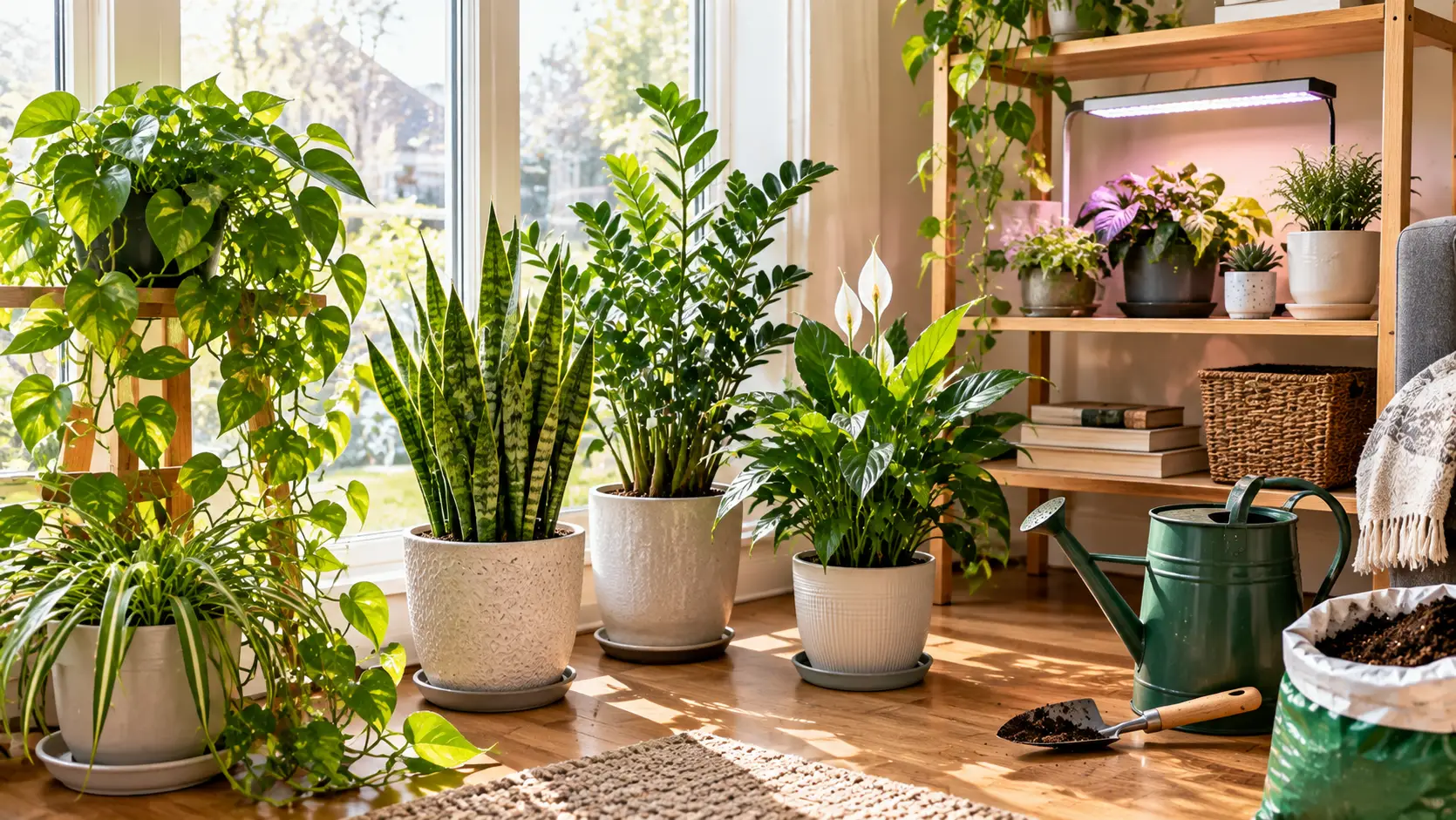
Light is the single biggest factor in indoor gardening for beginners, and most people overestimate how much their room actually gets. Before choosing plants, figure out which light category your space falls into.
| Light Level | Where to Find It | Best Plants |
| Direct light | Unobstructed south or west-facing window | Cacti, succulents, aloe vera |
| Bright indirect | Near an east-facing window, or a few feet back from a south or west one | Pothos, monstera, philodendron, fiddle leaf fig |
| Medium light | Middle of a room, several feet from a bright window | Dracaena, spider plant, prayer plant |
| Low light | Corner far from windows, or near a north-facing window | Snake plant, ZZ plant, cast iron plant |
If natural light is limited, especially in winter, a basic full-spectrum LED grow light run 12 or more hours a day keeps light-hungry plants from stretching toward the nearest window and growing thin and leggy.
Step 2: Choose the Right First Plants
Skip the plants that look impressive on a shelf but demand precise conditions. Start with something built to tolerate a beginner’s mistakes while you learn.
| Plant | Light Needs | Watering Frequency | Why It’s a Good First Plant |
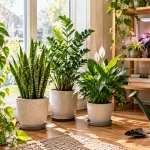
| Pothos | Low to bright indirect | Every 1-2 weeks | Droops when thirsty, then recovers fast once watered |
| Snake plant | Low to bright indirect | Every 2-4 weeks | Extremely drought-tolerant, hard to kill |
| ZZ plant | Low light to medium | Every 3-4 weeks | Stores water in its rhizomes, thrives on minimal attention |
| Spider plant | Bright indirect | Every 1-2 weeks | Fast-growing, produces new plantlets you can propagate |
| Peace lily | Medium to bright indirect | Weekly, roughly | Droops visibly when thirsty and bounces back quickly |
Pick 1 or 2 plants from this list rather than 6, especially in your first few months. Learning how one plant responds to your specific home makes the next one much easier.
Step 3: Get the Watering Right
Overwatering kills more houseplants than every pest combined, and it’s rarely about the amount of water. It’s about frequency: watering again before the soil has had a chance to dry, until roots sit in airless, waterlogged soil and start to rot.
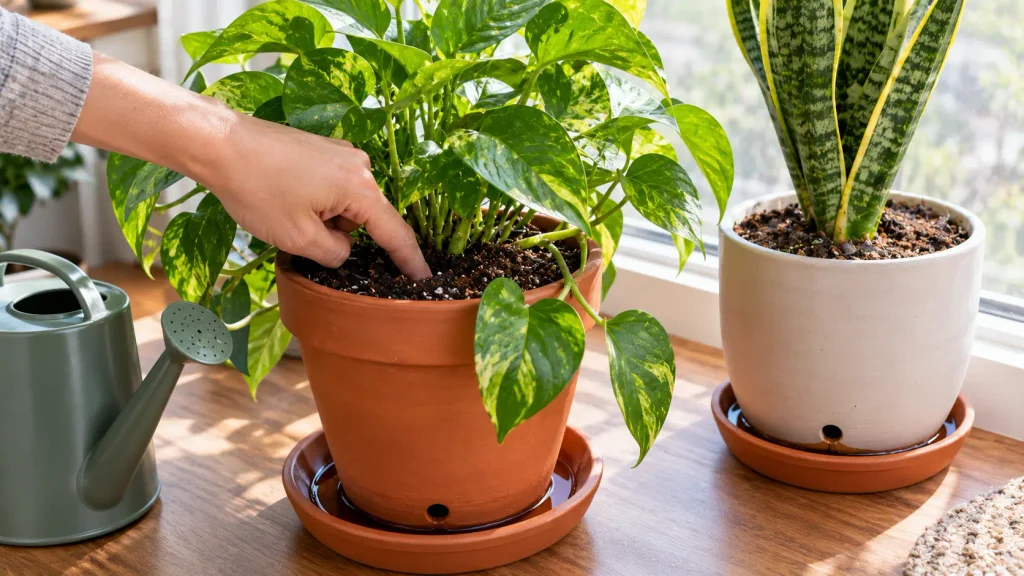
Water based on soil condition, never on a fixed schedule:
- Push a finger 1 to 2 inches into the soil.
- If it feels moist at that depth, wait and check again in a few days.
- If it feels dry, water thoroughly until water runs out the drainage hole.
Different plant types have different tolerances. Succulents and cacti should dry out completely between waterings. Moisture-loving tropical plants like pothos and philodendron do better when you water as soon as the top inch or two dries out, rather than letting the whole pot dry completely.
Step 4: Pick the Right Pot and Soil
A pot without a drainage hole is one of the most common reasons a beginner’s plant fails, regardless of how well they otherwise care for it. Water needs somewhere to go; without drainage, it pools at the bottom and keeps roots wet long after the surface looks dry.
| Pot Material | Pros | Best For |
| Plastic | Lightweight, holds moisture longer | Thirsty plants, tropical greens |
| Terracotta | Breathable, dries faster, prevents soggy roots | Succulents, cacti, herbs |
| Fabric grow bags | Air-prunes roots, dries evenly | Edible plants like peppers |
| Self-watering planters | Reservoir removes some guesswork | Beginners prone to forgetting to water |
Use potting soil suited to the plant, not garden soil, which compacts in a container and drains poorly indoors. Succulents and cacti need a fast-draining cactus mix; regular potting soil holds too much moisture for them and is one of the most common mismatches beginners make.
Step 5: Watch Humidity and Temperature
Most common houseplants do fine at standard indoor temperatures, but tropical plants like ferns, calathea, and some philodendrons appreciate higher humidity than the average heated or air-conditioned home provides. Signs a plant wants more humidity include browning leaf tips even when watering seems correct.
A small humidifier placed near humidity-loving plants, or grouping several plants together to raise the moisture in the air around them, both help without much added effort.
Step 6: Feed Lightly During Active Growth
Potting soil holds a limited nutrient supply that gets used up over time, unlike garden soil that’s constantly replenished. Feed most houseplants lightly every 2 to 4 weeks during spring and summer, when they’re actively growing, using a diluted liquid fertilizer.
Cut back or stop fertilizing in fall and winter for most plants, when growth naturally slows and excess nutrients are more likely to build up in the soil rather than get used.
Signs of Overwatering vs. Underwatering
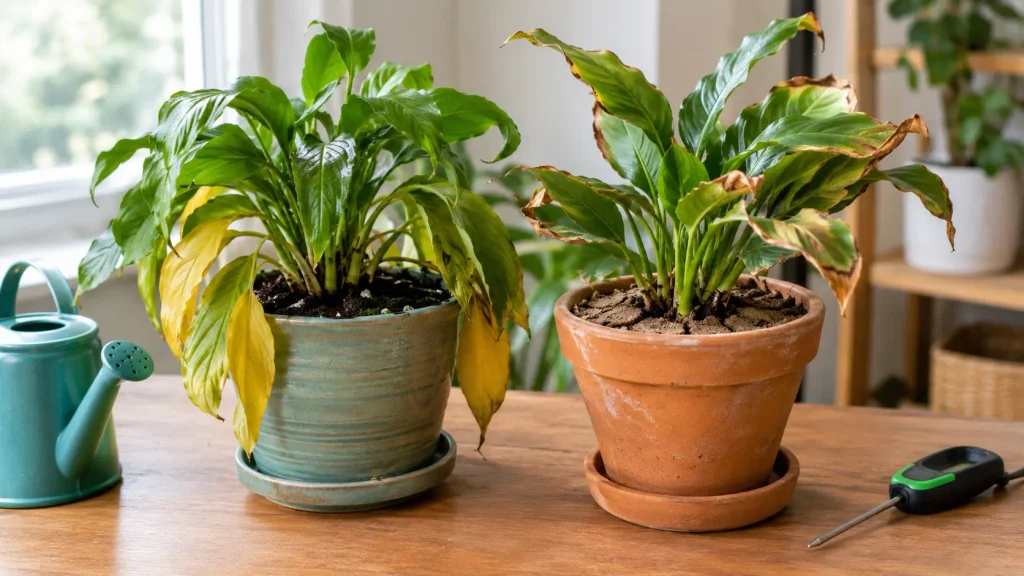
These two problems can look surprisingly similar at first glance, but the details tell them apart.
| Sign | Overwatering | Underwatering |
| Leaf color | Yellowing, often starting on lower leaves | Browning, often starting at leaf tips and edges |
| Leaf texture | Soft, mushy, limp | Crisp, dry, brittle |
| Soil | Stays wet for days, may smell musty | Dry, pulls away from the pot’s edges |
| Extra signs | Fungus gnats, mold on soil surface | Compact, hard soil; slow growth |
| Wilting | Can wilt even though soil is wet, since damaged roots can’t take up water | Wilts evenly, recovers once watered |
If you’re unsure which problem you’re looking at, check the soil first. Wet soil with a wilting plant points to overwatering and possible root damage; dry, pulled-away soil points to underwatering.
When to Repot
Most houseplants need repotting every 1 to 2 years, but a few clear signs tell you it’s time sooner:
- Roots growing out of the drainage holes.
- Soil that dries out within a day or two of watering, faster than it used to.
- Little to no new growth despite otherwise good care.
- The plant looking top-heavy or unstable in its current pot.
Move up one pot size at a time, typically 1 to 2 inches larger in diameter, rather than jumping to a much bigger container. An oversized pot holds far more soil and moisture than the roots can use, which raises the risk of the same overwatering problems described above.
Common Pests and How to Handle Them
Fungus gnats are the pest most directly tied to a beginner mistake: they thrive in consistently damp soil and lay eggs there. Letting the top inch or two of soil dry out between waterings breaks their breeding cycle, and yellow sticky traps catch the adults in the meantime.
Spider mites and aphids show up more often on stressed or overly dry plants. A firm spray of water on the leaves, or a diluted insecticidal soap for a heavier infestation, handles most cases without harsh chemicals.
Inspect any new plant carefully before bringing it near your other plants, since pests often arrive on a new purchase rather than developing on their own.
Growing Edible Plants Indoors
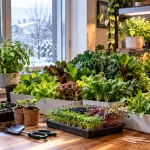
Indoor gardening isn’t limited to houseplants. Herbs like basil, parsley, and chives, along with fast-growing greens like lettuce, are realistic for a beginner to grow indoors on a bright windowsill or under a basic grow light.
These follow the same core rules as houseplants: check soil moisture rather than watering on a schedule, use a well-draining potting mix, and match the plant to the light you actually have. Edible crops generally need more light than typical houseplants, so a spot that seemed bright enough for a pothos may still fall short for basil.
Common Beginner Mistakes
Watering on a fixed schedule. Soil dries at different rates depending on light, temperature, and the season. Check before you water instead of watering every Sunday regardless of conditions.
Choosing a pot based on looks instead of drainage. A beautiful pot without a hole in the bottom sets up root rot from the start, even with otherwise perfect care.
Placing plants by how they look in a room rather than the light available. A plant that needs bright indirect light won’t thrive in a dim corner no matter how well everything else is handled.
Starting with too many plants at once. Learning how one or two plants respond to your specific home teaches you far more than juggling 6 new plants with different needs in your first month.
Using the wrong soil for the plant. Regular potting soil holds too much water for succulents and cacti, and garden soil compacts badly in any container.
Ignoring new-plant inspection. Pests very often arrive on a newly purchased plant, so check leaves and soil carefully before it sits near your existing collection.
Final Thoughts
Match your plants to the light you actually have, check the soil before you water instead of watering by the calendar, and use a pot with drainage. Start with 1 or 2 forgiving plants like pothos, snake plant, or ZZ plant rather than a full shelf at once, and pay attention to how your specific home affects them. Get comfortable with that rhythm, and the rest of indoor gardening, repotting, feeding, and troubleshooting pests- gets much easier to read.
FAQs
What is the easiest houseplant for a complete beginner?
Snake plant and ZZ plant are usually considered the most forgiving. Both tolerate low light and infrequent watering, and both bounce back easily from an inconsistent care routine while you’re still learning.
How often should I water my houseplants?
There’s no single answer that fits every plant. Check the soil 1 to 2 inches deep first; water if it’s dry, wait if it’s still moist. Succulents and cacti should dry out completely between waterings, while tropical plants like pothos do better watered as soon as the top inch or two dries.
How do I know if I’m overwatering or underwatering?
Overwatered plants often show yellow, soft leaves and soil that stays wet for days, sometimes with fungus gnats or a musty smell. Underwatered plants show brown, crisp leaf edges and dry soil that pulls away from the pot.
Do I need a grow light for indoor gardening?
Not for most common houseplants, as long as you match the plant to the natural light your space actually has. A grow light helps most in winter, when day length drops, or for light-hungry edible plants like basil and lettuce.
Why do my plant’s leaves keep turning yellow?
Yellowing most often points to overwatering, especially if it starts on the lower, older leaves and the soil feels consistently wet. Check soil moisture and drainage before assuming the plant needs fertilizer or more light.
How often should houseplants be fertilized?
Feed lightly every 2 to 4 weeks during spring and summer, when plants are actively growing. Cut back or stop in fall and winter, when growth slows, and unused fertilizer is more likely to build up in the soil.

Muhammad Nabeel is a gardening writer with a strong interest in growing plants and vegetables. He shares practical tips on gardening, soil care, plant health, and growing techniques. His goal is to make gardening easier to understand for beginners and home gardeners. He enjoys learning about plants and turning useful gardening knowledge into simple, helpful guides.