





Quick Answer
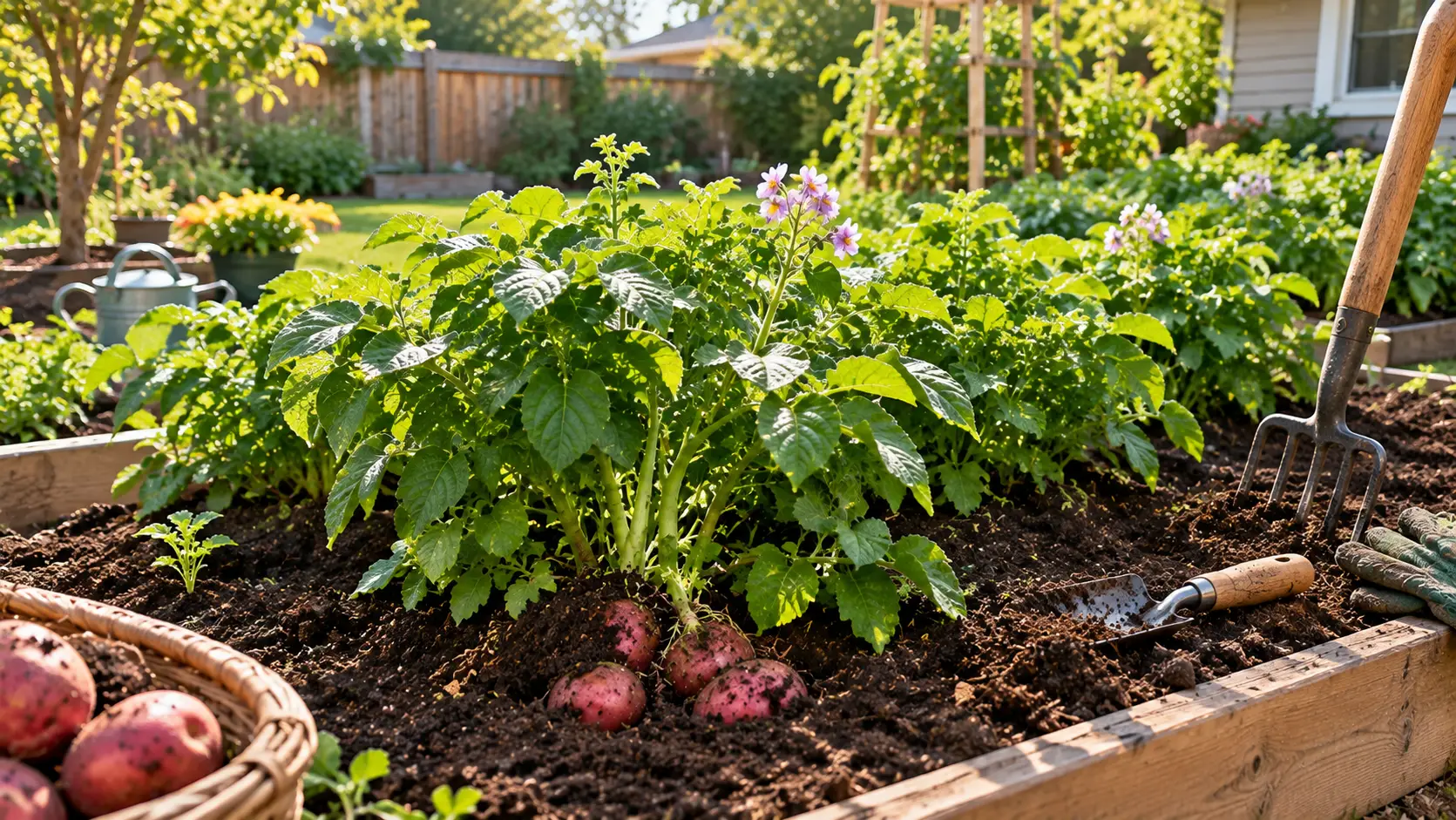
Fill a raised vegetable bed with a mix of topsoil and compost, roughly 60% topsoil to 40% compost, or use equal parts compost, peat moss (or coco coir), and coarse vermiculite for the classic square-foot gardening blend. For deep beds over 12 inches, save money by filling the bottom half with logs, branches, and leaves before adding 6 to 8 inches of quality growing mix on top.
A raised bed only performs as well as what’s inside it. Straight garden soil compacts inside a frame and drains poorly, while the wrong ratio of compost to filler leaves plants short on nutrients by midsummer. Getting this right the first time saves you from digging everything back out later.
This guide covers exactly how much material you need, the cheapest way to fill a deep bed without buying it all in bags, the standard soil mixes gardeners rely on, and what to skip entirely.
How Much Soil Do You Actually Need
Calculate volume with a simple formula: length (feet) × width (feet) × depth (feet) = cubic feet needed. Convert inches of depth to feet by dividing by 12.
| Bed Size | Depth | Volume Needed |
| 4×4 ft | 6 inches | 8 cubic feet |
| 4×4 ft | 12 inches | 16 cubic feet |
| 4×8 ft | 6 inches | 16 cubic feet |
| 4×8 ft | 12 inches | 32 cubic feet |
Bagged soil is usually sold in 1.5 to 2 cubic foot bags, so a standard 4×8 bed at 12 inches deep needs roughly 16 to 22 bags if you’re buying everything pre-bagged. Buying topsoil and compost in bulk by the cubic yard (27 cubic feet) is almost always cheaper once you’re filling more than one or two beds.
The Cheapest Way to Fill a Deep Bed: Layer From the Bottom Up
You rarely need to fill an entire bed with purchased soil, especially if it’s deeper than 12 inches. Layering free or low-cost organic material in the lower portion, a method related to hugelkultur and core gardening, cuts costs and builds a bed that improves over time as the material below breaks down.

Bottom Layer: Bulky Organic Filler
Fill the lowest third of a deep bed with things you likely already have or can get for free: fallen branches, sticks, untreated wood scraps, dried leaves, pine needles, or old straw. This layer takes up space cheaply and breaks down slowly over several seasons, acting like a sponge that holds moisture as it decomposes.
Middle Layer: Partially Broken-Down Material
Add 3 to 5 inches of material that’s further along in decomposing: half-finished compost, grass clippings mixed with leaves, old potting soil from containers, or general garden clean-up debris. This layer feeds the microbes working on the bottom layer and starts building real soil structure.
Top Layer: Quality Growing Mix
The top 6 to 8 inches is where roots actually live and where your purchased soil should go. This is the only layer worth spending real money on, since it’s what feeds your plants directly through the season.
Best Soil Mixes for the Top Layer
The 60/40 Blend
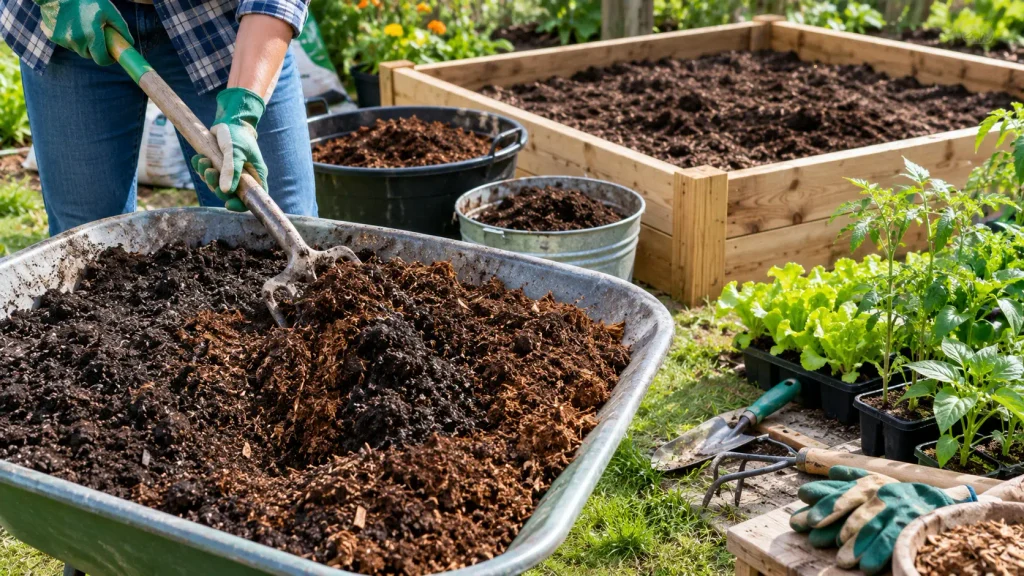
A straightforward mix of 60% topsoil and 40% compost works well for most vegetable gardens and costs less than specialty blends. Topsoil holds moisture and provides mineral content; compost adds nutrients and organic matter. If your topsoil runs sandy, bump the compost up slightly; if it runs heavy in clay, keep compost closer to 25 to 30% and consider adding coarse sand for drainage.
Mel’s Mix
Mel’s Mix, developed for square foot gardening, uses equal parts by volume of compost, peat moss (or coco coir), and coarse vermiculite. It drains well, resists compaction, and holds nutrients evenly, which is why it’s become one of the most cited raised bed recipes for small, intensive beds. It costs more than the 60/40 blend but rarely needs replacing, since none of its ingredients compact down the way straight topsoil does.
Coco coir works as a peat moss substitute with a pH closer to what most vegetables prefer, and it’s a renewable resource rather than a harvested one.
What Not to Use When Filling a Raised Bed
Skip anything synthetic. Weed barrier fabric, plastic sheeting, and other non-organic materials create hard layers that roots struggle to cross and do nothing to feed the soil over time. Treated wood scraps can leach chemicals into the soil your vegetables are growing in, so stick to untreated wood for any bottom-layer filler.
Avoid filling an entire deep bed with 100% compost as well. Straight compost holds too much moisture, breaks down and compacts faster than a blended mix, and can actually harm young seedlings with its nutrient concentration.
Filling a Bed on Existing Ground
If your raised bed sits on an existing lawn, you don’t need to remove the grass first. A bed filled with 8 or more inches of soil smothers grass underneath without any extra effort, and the decomposing grass adds a small amount of organic matter to the bottom of the bed over time.
If the native soil beneath the bed is compacted or heavy in clay, work in a mixture of compost and topsoil at a 1:1 or 1:2 ratio into the top few inches of that native soil before adding your main fill. This helps the two layers connect instead of creating a hard boundary that roots won’t cross.
If you’re adding a raised bed to soil that’s already in reasonably good shape, not compacted, with topsoil intact, you can often get away with mixing 2 to 4 inches of compost into the existing top 4 inches rather than bringing in a full fill.
Settling and Topping Off Over Time
Any raised bed filled with organic material settles as it breaks down, and this is normal rather than a sign you did something wrong. Expect the soil level to drop noticeably in the first year, especially if you used a layered method with looser material at the bottom.
Plan to top off the bed with an inch or two of fresh compost each spring. Beds filled mostly with topsoil and a smaller compost ratio settle less over time than beds built around a heavy layered or hugelkultur base, so if minimal yearly maintenance matters to you, that’s worth factoring into which method you choose.
Common Mistakes
Filling the whole bed with bagged topsoil alone. Straight topsoil compacts inside a raised frame and doesn’t drain as well as a blended mix. Always combine it with compost or another organic amendment.
Using treated lumber scraps as bottom-layer filler. These can leach chemicals into the soil above them. Stick to untreated wood, branches, and plant debris.
Skipping the calculation and guessing on quantity. Running short partway through a fill means an extra trip and mismatched soil batches. Measure your bed and calculate cubic feet before you buy anything.
Packing the bottom layers down too tightly. Some settling is fine and expected, but heavily compacting bulky filler material defeats the drainage and aeration benefits that layering is supposed to provide.
Ignoring your native soil underneath. If the ground below a new bed is heavily compacted clay, water can struggle to drain through it even with perfect soil on top. Loosening or amending the top few inches of native soil first helps the whole system work together.
Final Thoughts
Calculate your bed’s volume before buying anything, and don’t feel obligated to fill a deep bed with purchased soil. Layer bulky organic material at the bottom of anything deeper than 12 inches, then put your budget into a real growing mix, either a 60/40 topsoil-compost blend or Mel’s Mix, for the top 6 to 8 inches. Expect some settling in year one; plan to top off each spring, and the bed only gets better from there.
FAQs
How deep does a raised bed need to be for vegetables?
Most vegetables do well in 6 to 12 inches of soil. Shallow-rooted crops like lettuce, herbs, and radishes are fine with 6 inches, while tomatoes, peppers, and root vegetables like carrots perform better with 12 inches or more.
Can I just use bagged garden soil to fill a raised bed?
It’s better to blend it with compost rather than use it alone. Straight garden soil compacts more than a blended mix and doesn’t drain as well once contained inside a raised frame.
Is Mel’s Mix worth the extra cost over a basic topsoil and compost blend?
It depends on your budget and how many beds you’re filling. Mel’s Mix resists compaction and rarely needs replacing, which can offset the higher upfront cost over several seasons, especially for smaller, intensive beds.
Do I need to remove grass before filling a raised bed?
No. A bed filled with at least 8 inches of soil smothers grass underneath on its own, and the decomposing grass adds a small amount of organic matter to the bottom of the bed.
Why is my raised bed soil level dropping every year?
This is normal settling as organic material in the mix breaks down. Top off the bed with an inch or two of fresh compost each spring rather than treating it as a one-time fill.
What’s the cheapest way to fill a deep raised bed?
Layer free or low-cost bulky organic material, like branches, leaves, and straw, in the bottom half to two-thirds of the bed, then reserve your purchased soil and compost for the top 6 to 8 inches where roots actually grow.