





Quick Answer
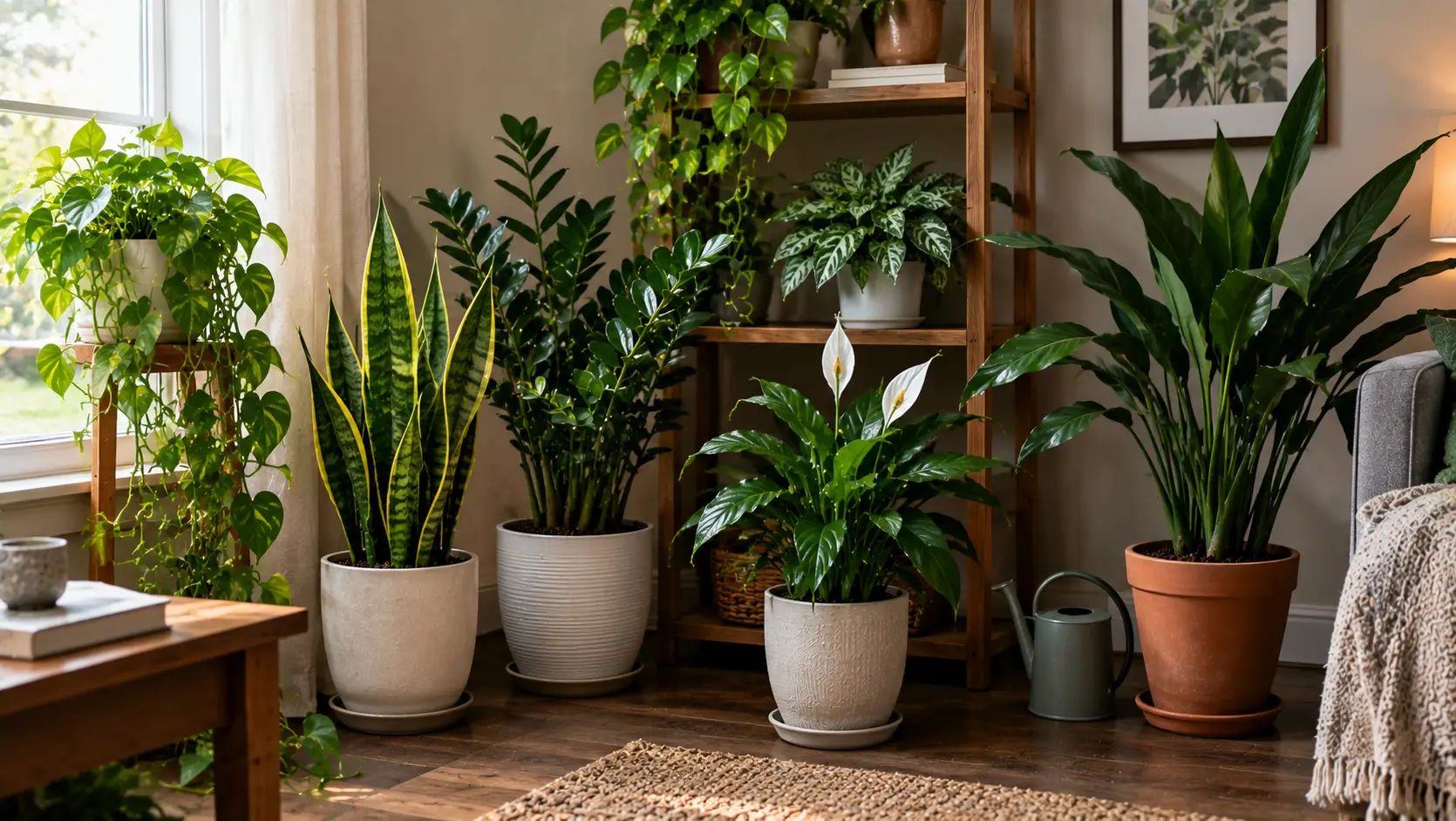
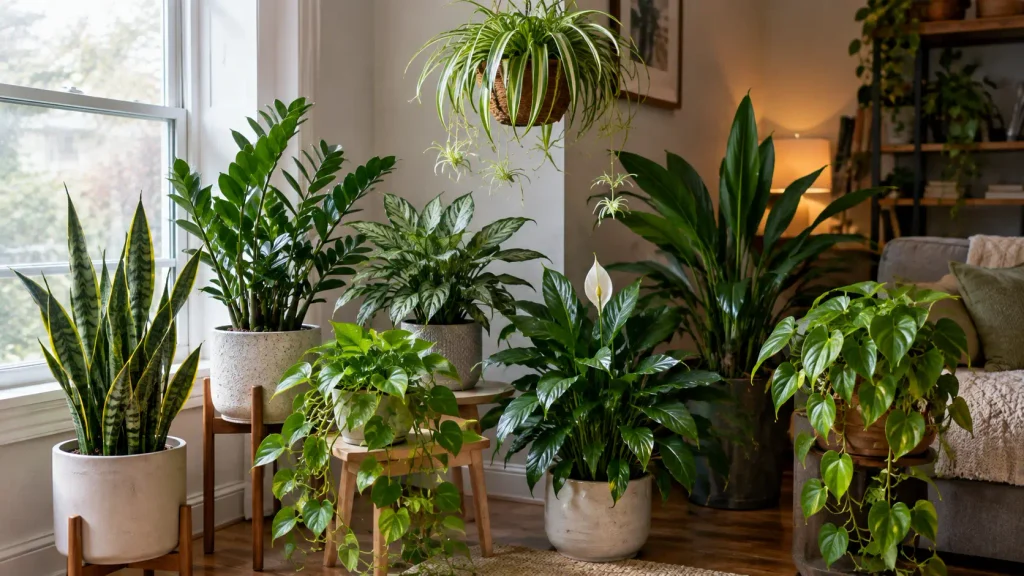
The best indoor plants for low light are snake plant, ZZ plant, pothos, Chinese evergreen, cast iron plant, and peace lily. These low-light houseplants grow in north-facing rooms, hallways, and spots several feet from a window. For very low-light indoor plants that survive near-windowless rooms, stick with snake plant, ZZ plant, and cast iron plant. Most still need some indirect daylight or a grow light to stay healthy long-term.
A dark corner of your living room or a bathroom with one small window doesn’t rule out houseplants. It just narrows the list.
The plants below come from tropical forest floors, where tall trees block most of the sun overhead. That background is why they tolerate rooms most other houseplants would struggle in. Pick from this list of the best indoor plants for low light, and you can skip the stress of watching leaves yellow and drop every few weeks.
What “Low Light” Actually Means
“Low light” gets used loosely in plant care, so it helps to pin down what it means before you buy anything.
Growers measure indoor light in foot-candles. A spot reading 25 to 100 foot-candles counts as low light. For comparison, a bright, sunny windowsill can hit 1,000 foot-candles or more. There’s no light meter required to get a rough sense of this. Hold your hand a foot above the floor or a tabletop where the plant would sit.
- A sharp, clear shadow means bright light.
- A soft shadow with fuzzy edges means medium light.
- A faint, barely-there shadow means low light.
- No shadow at all means the spot is too dark for almost any plant to survive without help.
If you can’t comfortably read a book in that spot during the day, you’re in low light territory. If the room has no window or the blinds stay shut most of the day, you’re dealing with very low light, and your plant choices shrink further.
One thing worth being upfront about: no houseplant grows well in total darkness forever. “Low light tolerant” means a plant survives and grows slowly with little light, not that it thrives with none. If a room gets zero natural light, a plant will eventually need a grow light running several hours a day, even if it’s one of the tough species below.
The Best Low Light Houseplants
Snake Plant (Dracaena trifasciata, formerly Sansevieria)
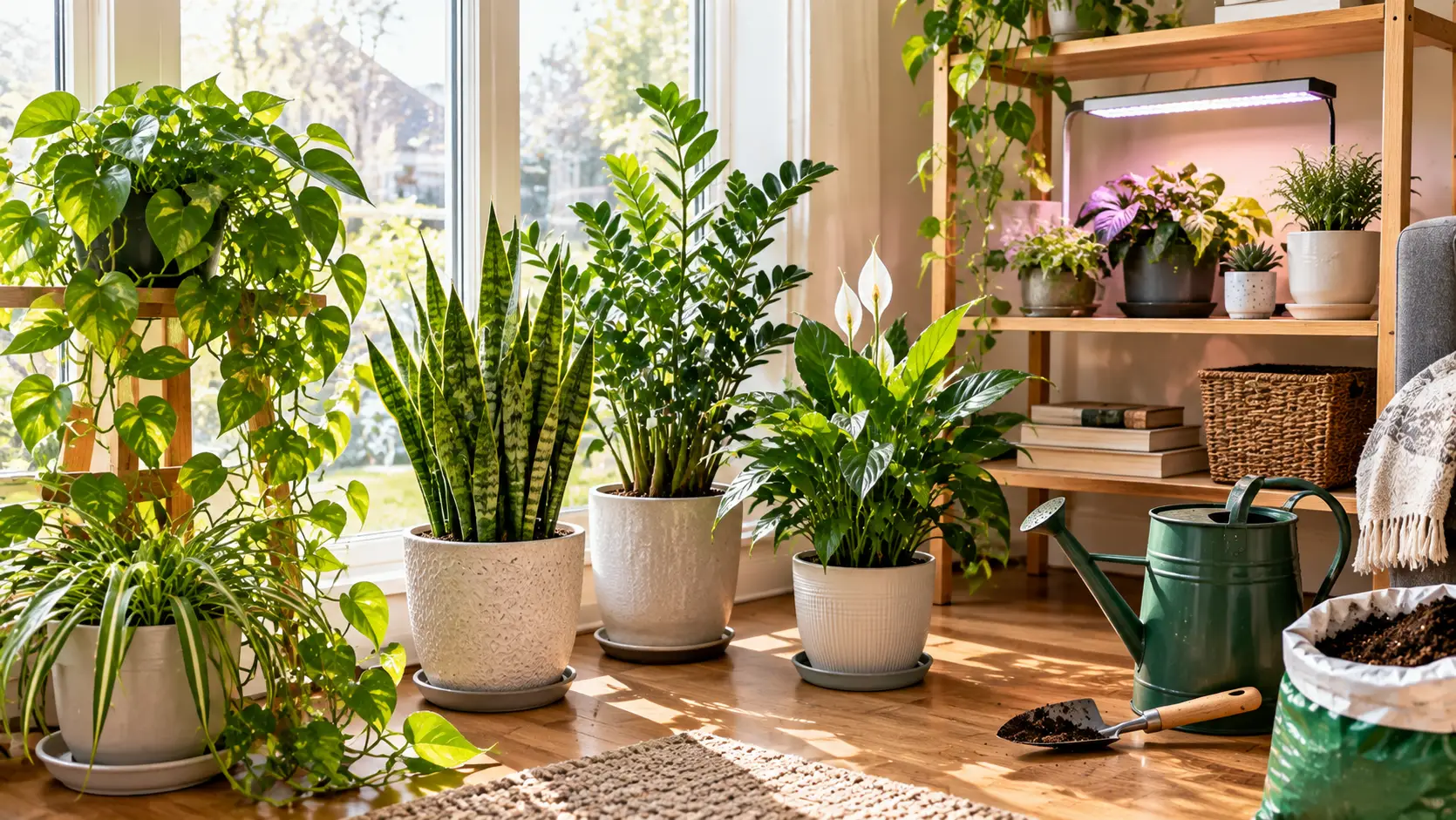
The snake plant is the plant people mean when they say a houseplant is nearly impossible to kill. Its stiff, upright leaves store water, so it handles missed waterings without complaint. It grows in low light, tolerates dry indoor air, and doesn’t mind being left in the same pot for a couple of years.
Water it every 2 to 3 weeks, less in winter, and let the soil dry out fully between waterings. Overwatering, not low light, is what actually kills this plant. Keep it out of reach of cats and dogs, since the leaves are mildly toxic if chewed.
ZZ Plant (Zamioculcas zamiifolia)
The ZZ plant has thick, glossy leaves that look almost artificial, and it grows from a potato-like rhizome that stores water and nutrients. That storage system lets it go weeks without water and still look fine in a dim office or an interior hallway.
Water once the top 2 to 3 inches of soil are dry, roughly every 2 to 3 weeks. Avoid direct sun, which can scorch the leaves. Like the snake plant, it’s toxic if eaten, so keep it away from pets and small children.
Pothos (Epipremnum aureum)
Pothos is a trailing vine that adapts to almost any indoor condition, including low light. Solid green varieties handle dim rooms better than variegated ones, since the white or yellow patches on variegated leaves need more light to stay visible. In low light, a variegated pothos often reverts to solid green over time.
Let the soil dry out between waterings and trim long vines to keep the plant full instead of leggy. It’s an easy plant to propagate: cut a piece with a node, drop it in water, and it roots within a few weeks.
Chinese Evergreen (Aglaonema)
Chinese evergreen tolerates low light better than most patterned houseplants, and it comes in leaf colors ranging from deep green to pink and red mottling. Darker-leafed varieties handle lower light than the pink or red ones, since more chlorophyll means the plant needs less light to photosynthesize.
It prefers warm rooms (65 to 80°F) and average humidity. Water when the top inch of soil feels dry, and don’t let it sit in cold drafts near a door or window in winter.
Cast Iron Plant (Aspidistra elatior)
Cast iron plant earned its name for a reason. It survives low light, temperature swings, dry air, and irregular watering better than almost any other houseplant, and it’s non-toxic to cats and dogs. The trade-off is slow growth. A cast iron plant might take a year to add just a few new leaves.
Water every 1 to 2 weeks, letting the soil dry between waterings. Wipe dust off the leaves occasionally so they can still absorb what little light reaches them.
Peace Lily (Spathiphyllum)
Peace lily tolerates low light and gives you a built-in watering reminder: the leaves droop noticeably when the plant needs water, then perk back up within hours of a good soak. That makes it forgiving for beginners who tend to forget watering schedules.
It flowers less in low light and may not bloom at all in a windowless room, but the glossy green leaves still look good on their own. It’s toxic to pets, so keep that in mind if you have cats or dogs that chew on leaves.
Philodendron (heartleaf variety)
Heartleaf philodendron is a trailing plant with small, glossy, heart-shaped leaves. It tolerates low to medium light and grows well in a hanging basket or trained up a pole. Growth slows in dim rooms, but the plant stays healthy as long as you don’t overwater it.
Water when the top inch or two of soil is dry. It’s toxic to pets if ingested, similar to pothos and peace lily.
Spider Plant (Chlorophytum comosum)
Spider plant handles low to medium light and is one of the few plants on this list that’s completely non-toxic to cats and dogs. It produces small offsets, often called “pups,” that dangle from the mother plant on long stems and can be potted separately to grow new plants for free.
Water when the top inch of soil dries out. Brown leaf tips are common and usually come from tap water minerals or dry air rather than low light itself.
Dracaena (Corn Plant and Dragon Tree varieties)
Dracaena fragrans (corn plant) and Dracaena marginata (dragon tree) both tolerate low light and grow into tall, tree-like plants over several years, which makes them useful for filling an empty corner. They’re slow growers in dim rooms and drought-tolerant once established.
Water every 1 to 2 weeks and use filtered or distilled water if possible. Dracaenas are sensitive to the fluoride in some tap water, which shows up as brown leaf tips. They’re toxic to pets.
Calathea and Prayer Plant (Maranta)
Calathea and prayer plant tolerate medium-low light and fold their leaves upward at night, a movement called nyctinasty. They’re listed on plenty of low light plant guides, but they’re less forgiving than the plants above. They want consistent humidity and moisture, and they show stress quickly in very dark or dry rooms.
If you want a calathea to actually thrive rather than just survive, medium indirect light and a humidity tray or humidifier will get better results than a true low light spot. Both are non-toxic to pets.
Comparison Table: Low Light Indoor Plants at a Glance
| Plant | Light tolerance | Watering | Pet safe? | Growth speed |
| Snake plant | Very low to bright | Every 2-3 weeks | No | Slow |
| ZZ plant | Very low to medium | Every 2-3 weeks | No | Slow |
| Pothos | Low to medium | Weekly, when top soil dries | No | Fast |
| Chinese evergreen | Low to medium | Weekly, when top inch dries | No | Moderate |
| Cast iron plant | Very low to medium | Every 1-2 weeks | Yes | Very slow |
| Peace lily | Low to medium | Weekly, when it droops | No | Moderate |
| Philodendron | Low to medium | Weekly, when top soil dries | No | Moderate |
| Spider plant | Low to medium | Weekly, when top soil dries | Yes | Fast |
| Dracaena | Low to medium | Every 1-2 weeks | No | Slow |
| Calathea/prayer plant | Medium (fussy in low light) | Keep evenly moist | Yes | Moderate |
Very Low Light Indoor Plants for Windowless Rooms
If you’re working with a room that has no window at all, such as an interior bathroom, a basement, or an office cubicle lit only by fluorescent lights, your options narrow to the toughest plants on the list:
- Snake plant
- ZZ plant
- Cast iron plant
- Pothos (growth will be slow and vines will stay shorter)
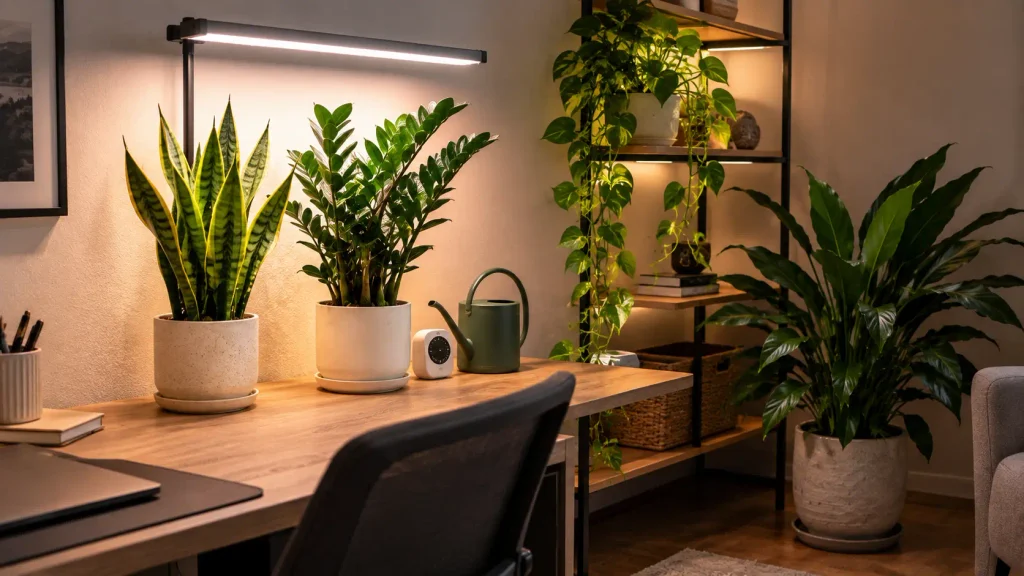
Even these will thin out or stop growing new leaves after several months with zero natural light. If the room has no window, plan on a simple LED grow light on a timer for 8 to 10 hours a day. A basic clip-on grow light costs less than most houseplants and makes the difference between a plant that survives and one that actually grows.
How to Care for Low Light Houseplants
Water less than you think you should
Plants in low light use water more slowly because they’re not running photosynthesis at full speed. The single most common way people kill a “low light plant” is watering it on the same schedule they’d use for a plant in a bright window. Check the soil with your finger before watering. If the top 1 to 2 inches feel dry, water. If not, wait.
Skip heavy fertilizing
A plant growing slowly in low light doesn’t need frequent feeding. Fertilize once every 6 to 8 weeks during spring and summer, and skip it entirely in fall and winter when growth naturally slows.
Clean the leaves
Dust builds up on leaves and blocks what little light reaches them. Wipe leaves with a damp cloth every few weeks. It’s a small step that noticeably helps plants that already get minimal light.
Rotate the pot
Turn the pot a quarter turn every couple of weeks so all sides of the plant get equal exposure. Without this, plants in low light often grow lopsided, leaning hard toward whatever light source exists.
Watch for signs of too little light
Stretched, pale, or unusually small new leaves signal that even a low light plant isn’t getting enough. Move it a few feet closer to a window, or add a grow light, before the plant declines further.
Common Mistakes With Low Light Plants
Overwatering causes more low light plant deaths than darkness does. Slower growth means slower water use, and soggy soil in a dim room stays wet longer, which invites root rot.
Picking a flowering plant for a dark room is another common letdown. Peace lilies and other flowering houseplants can survive low light, but they rarely bloom without brighter, indirect light. If you want flowers, plan on supplemental lighting or a brighter spot.
Skipping the light check before buying is the mistake that causes the rest. A quick hand-shadow test in the actual spot you’re planning for tells you more than any plant tag at the store.
Final Thoughts
A dark room doesn’t mean a plant-free room. Snake plant, ZZ plant, pothos, Chinese evergreen, and cast iron plant handle low light better than almost anything else you can buy at a nursery, and each one forgives the occasional missed watering. Match the plant to an honest read of your room’s light, water less than instinct tells you to, and even the dimmest corner of your home can hold something green.
FAQs
Can any plant survive in a room with zero natural light?
Not indefinitely. Even snake plants and ZZ plants, the toughest low-light indoor plants available, need some light to photosynthesize. In a truly windowless room, a grow light running several hours a day can keep them alive long term.
How do I know if my room has low light or medium light?
Use the hand-shadow test a foot above where the plant will sit. A soft, blurry shadow means medium light. A faint shadow you can barely make out means low light. No shadow at all means the spot needs supplemental lighting for most plants.
Which low light plants are safe for homes with cats or dogs?
Cast iron plant, spider plant, and calathea are non-toxic to pets. Snake plant, ZZ plant, pothos, philodendron, peace lily, and dracaena are all toxic if chewed or eaten, so keep them out of reach if you have curious pets.
Do low light plants need less water than other houseplants?
Yes, generally. Slower growth in low light means the soil stays wet longer, so plants need watering less often than the same species would in bright light. Check the soil moisture rather than following a fixed schedule.
What’s the easiest low light plant for a beginner?
Pothos and snake plant are the two most forgiving choices. Pothos tells you it needs water by slightly drooping its leaves, and snake plant survives weeks of neglect with little change.