






Quick Answer
The best soil for growing watermelons is loose sandy loam with a pH between 6.0 and 6.8, plenty of organic matter, and fast drainage. Watermelons are heavy feeders with deep roots, so the soil needs to warm up quickly in spring, drain well after rain, and still hold enough moisture to swell fruit through a long growing season. Heavy clay soil works too, once amended with compost and coarse sand.
Watermelon vines send roots several feet deep and spread wide across the surface, pulling water and nutrients from a much larger area than a compact plant like lettuce or peppers. Get the soil right, and a single plant can produce 2 to 3 large fruits over a season. Get it wrong, in soil that stays cold and wet or bakes hard after watering, and vines grow slowly with small, poor-quality fruit.
This guide covers exactly what watermelon roots need: soil type, pH, temperature, drainage, and how to amend whatever soil you’re starting with, whether that’s heavy clay, thin sand, or an average garden bed.
The Ideal Soil Type: Sandy Loam
Sandy loam is the standard recommendation from every major extension service that studies watermelon production, and for good reason. It combines two things watermelons need at the same time: fast drainage so roots never sit in standing water, and enough body to hold moisture and nutrients between waterings.
Pure sand alone doesn’t hold water or fertilizer well enough for a heavy feeder like watermelon. Straight clay drains too slowly and stays cold longer into spring, both of which stunt young plants. Sandy loam splits the difference, and it’s also the reason light, sandy fields are favored for early-season watermelon production: they warm up faster once the weather turns.
Soil pH for Watermelons
Aim for a pH between 6.0 and 6.8. Watermelon tolerates soil as acidic as 5.5, but nutrients become far less available to the plant outside the 6.0 to 6.8 range, even if the nutrients are technically present in the soil.
Test your soil before planting rather than guessing. A basic pH test kit or a sample sent to your local extension office tells you exactly where you stand. If the soil tests too acidic, work in lime according to the test results. If it’s too alkaline, sulfur brings it down.
How to Prepare Your Soil Before Planting
- Test your soil. Know your starting pH and nutrient levels before you add anything.
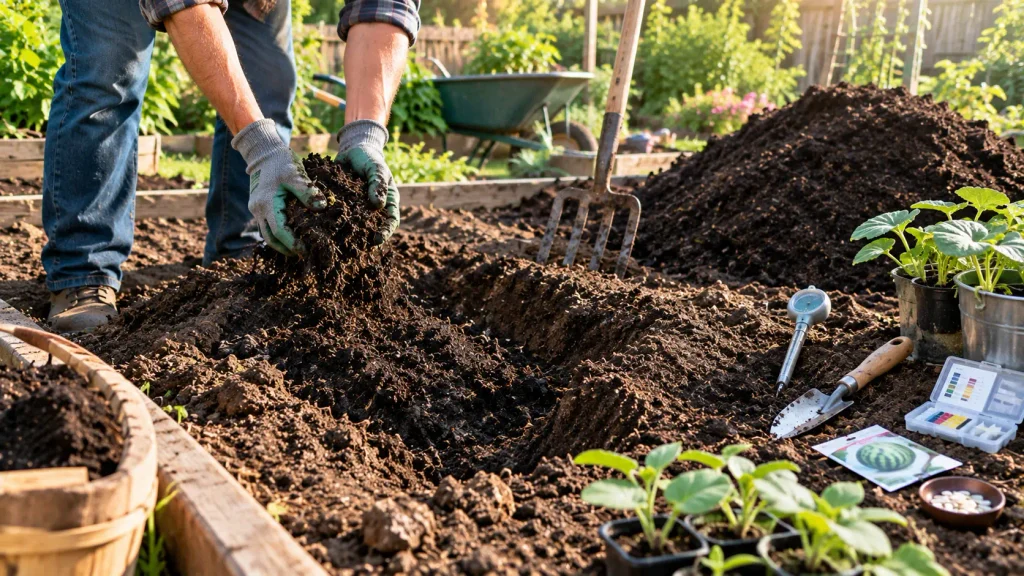
- Loosen the soil to at least 12 inches deep. Watermelon roots grow deep, and compacted soil below the surface limits how far they can reach.
- Work in 2 to 4 inches of aged compost or well-rotted manure across the planting area. This improves both drainage in heavy soil and moisture retention in sandy soil.
- Add coarse sand or perlite to clay-heavy soil to open up compaction and improve drainage further.
- Skip fresh manure. It’s too high in nitrogen for this stage and can push leafy vine growth at the expense of flowers and fruit.
Fixing Clay Soil
Clay holds water and nutrients well but drains slowly, which raises the risk of root rot in watermelon’s deep root system. If you’re working with clay:
- Mix in compost and coarse sand across the top 12 inches, not just the surface.
- Build a raised bed or mound instead of planting at grade, since raised soil drains faster and warms up sooner in spring.
- Water deeply but less often, since clay holds moisture longer between waterings than sandy loam does.
Fixing Sandy Soil
Very sandy soil drains almost too well, so it loses water and nutrients faster than watermelon can use them. If your soil is closer to pure sand:
- Add extra organic matter, more than you would for an average loam, to help the soil hold moisture and fertility.
- Water more frequently, since sandy soil dries out faster between irrigations.
- Consider a windbreak for young seedlings; loose, sandy soil is more prone to wind erosion, which can damage or stunt small plants.
Soil Temperature: The Factor Most Gardeners Miss
Soil type and pH matter, but soil temperature decides whether seeds germinate at all. Watermelon seeds need soil temperatures of at least 65 to 70°F at a 4-inch depth to germinate reliably, and they grow best when soil sits in the 75 to 85°F range through the season.
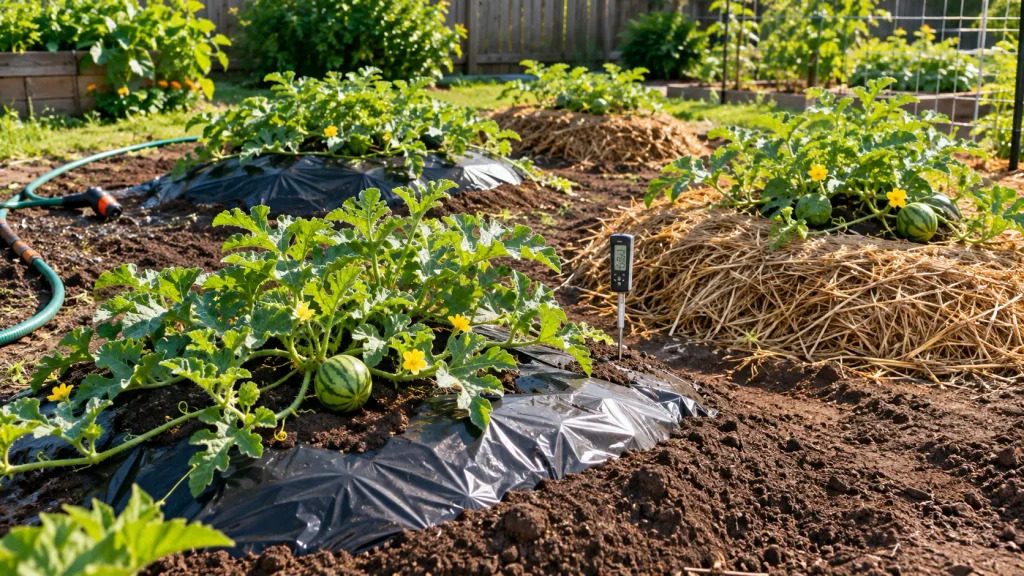
Planting into cold soil, even soil that looks and drains fine, is one of the most common reasons watermelon seeds fail to come up or seedlings stall for weeks. Use a simple soil thermometer rather than guessing from the air temperature or the calendar date. If your soil runs cold, black plastic mulch or a raised mound warms it several degrees faster than flat, unmulched ground.
Fertilizing Watermelon Soil
Watermelon is a heavy feeder, but the type of fertilizer matters as much as the amount. At planting, work in a balanced fertilizer such as 10-10-10, or a ratio closer to 4-8-5, into the soil. Too much nitrogen at this stage produces vigorous leafy vines with fewer flowers and less fruit.
Once vines start producing runners and flowers appear, switch to a fertilizer lower in nitrogen and higher in potassium. Potassium supports fruit development directly, while excess nitrogen at this stage continues to favor leaf growth over the fruit you actually want.
Watermelons also respond well to phosphorus for root development and benefit from boron and magnesium in soils that run short on either.
Raised Beds, Mounds, and Hills
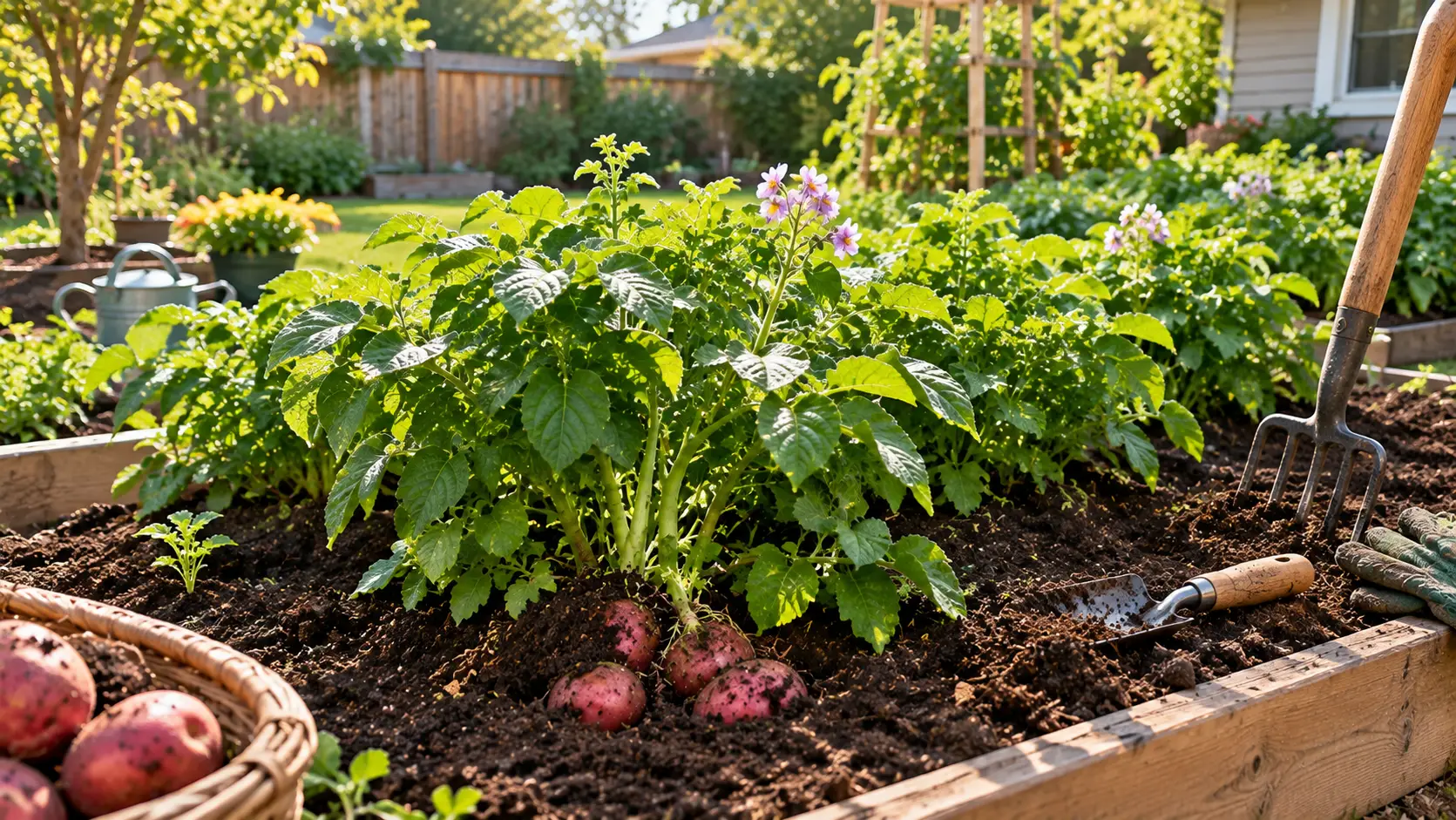
Most experienced growers plant watermelon on raised mounds or hills rather than flat ground, for two reasons: mounds drain faster after rain, and raised soil warms up sooner in spring than soil at grade.
A typical mound runs 8 to 10 inches tall and 10 to 12 inches across, with 3 to 4 seeds planted per mound and later thinned to 1 or 2 plants. Space mounds 4 feet apart in most home gardens, with rows 6 feet apart for standard vining varieties; compact bush types need less room.
Raised beds work the same way at a larger scale. Space plants 24 to 36 inches apart in a raised bed and let vines trail outside the bed once they outgrow it, which they will.
Mulching for Soil Temperature and Moisture
Mulch helps watermelon soil in two ways: conserving moisture and moderating temperature, but timing depends on which type you use.
- Black plastic mulch warms soil and can go down early, even before soil reaches ideal planting temperature, which helps in short growing seasons.
- Organic mulch (straw, shredded leaves) should wait until soil has warmed to at least 75°F. Applied too early, organic mulch actually insulates cold soil and slows warming.
Either type reduces weed competition and cuts down on how often you need to water once vines are established.
Soil Types Compared
| Soil Type | Drainage | Warms Up | Nutrient Holding | Verdict for Watermelon |
| Sandy loam | Fast | Fast | Good | Ideal, needs little amending |
| Loam | Moderate | Moderate | Very good | Good, works well as-is |
| Clay | Slow | Slow | Excellent | Usable, needs sand and compost |
| Pure sand | Very fast | Very fast | Poor | Usable, needs extra organic matter and water |
Growing Watermelon in Containers
Compact and bush varieties can grow in large containers if garden space is limited. Use a container of at least 20 gallons, since watermelon’s root system still needs room to spread even on a smaller vine. Fill it with a loose, well-draining potting mix blended with compost, not straight garden soil, which compacts inside a container and drains poorly.
Container-grown watermelons dry out faster than in-ground plants, especially in hot weather, so check soil moisture daily once fruit starts to form. A mix that stays too wet in a container causes the same root problems as waterlogged clay in the ground.
Common Soil Mistakes
Planting in cold soil. Checking the calendar instead of the soil temperature is the single most common reason for poor germination. Wait for soil to hit at least 65°F at a 4-inch depth.
Using fresh manure at planting. This pushes leafy growth over fruit and can also introduce pathogens into a bed that will hold moisture around developing melons.
Skipping the pH test. Soil that looks fine on the surface can sit outside the 6.0 to 6.8 range, which locks up nutrients even when they’re present.
Planting in unamended clay. Watermelon roots need to push deep and wide. Compacted clay without added organic matter and drainage amendments stunts root growth from the start.
Applying organic mulch too early. This traps cold in the soil right when you want it to warm up.
Final Thoughts
Watermelon soil comes down to 3 things: loose sandy loam that drains fast, a pH between 6.0 and 6.8, and enough warmth at planting time to get seeds up quickly. Amend clay with compost and sand, amend sandy soil with extra organic matter, and feed the plant with balanced fertilizer early and potassium-rich fertilizer once flowers appear. Get the soil right before you plant, and the rest of the season gets a lot easier.
FAQs
What is the ideal soil pH for watermelons?
Aim for 6.0 to 6.8. Watermelon tolerates soil as acidic as 5.5, but nutrients become less available to the plant outside the ideal range.
Can watermelons grow in clay soil?
Yes, with amendments. Mix compost and coarse sand into the top 12 inches, and consider a raised bed or mound so excess water drains away from the root zone instead of pooling around it.
How warm does soil need to be to plant watermelon seeds?
At least 65 to 70°F at a 4-inch depth. Seeds germinate poorly or not at all in colder soil, regardless of air temperature or the date on the calendar.
Do watermelons need a lot of fertilizer?
Yes, they’re heavy feeders. Use a balanced fertilizer at planting, then switch to one lower in nitrogen and higher in potassium once vines start flowering, to favor fruit development over leaf growth.
Should I plant watermelon on a mound or flat ground?
A mound or raised bed is usually the better choice. Raised soil drains faster and warms up sooner in spring than soil at grade, both of which benefit watermelon’s deep root system.
When should I add mulch around watermelon plants?
Black plastic mulch can go down early to warm the soil. Organic mulch like straw should wait until soil has already warmed to about 75°F, since applying it too early slows soil warming