

Quick Answer
Growing vegetables indoors in winter works best with leafy greens, herbs, and microgreens, since they need less light than fruiting crops. Lettuce, spinach, arugula, and kale grow well on a bright windowsill or under a basic LED grow light, with harvests in 20 to 40 days. Tomatoes and peppers can also grow indoors, but they need 14 to 16 hours of strong light daily, warm temperatures, and hand pollination to produce fruit.
Outdoor gardens go dormant in winter, but the growing season doesn’t have to stop. Indoors, you control light, temperature, humidity, and feeding instead of waiting on the weather. Growing vegetables indoors in winter also sidesteps a few outdoor problems: fewer pests, no summer heat stress, and no unexpected frost.
The tradeoff is light. Short winter days rarely give plants enough natural sun, so most indoor winter gardens depend on a grow light for anything beyond a few windowsill herbs. This guide covers what to grow, what equipment actually matters, and where new indoor growers tend to go wrong.
What You Need Before You Start
Light
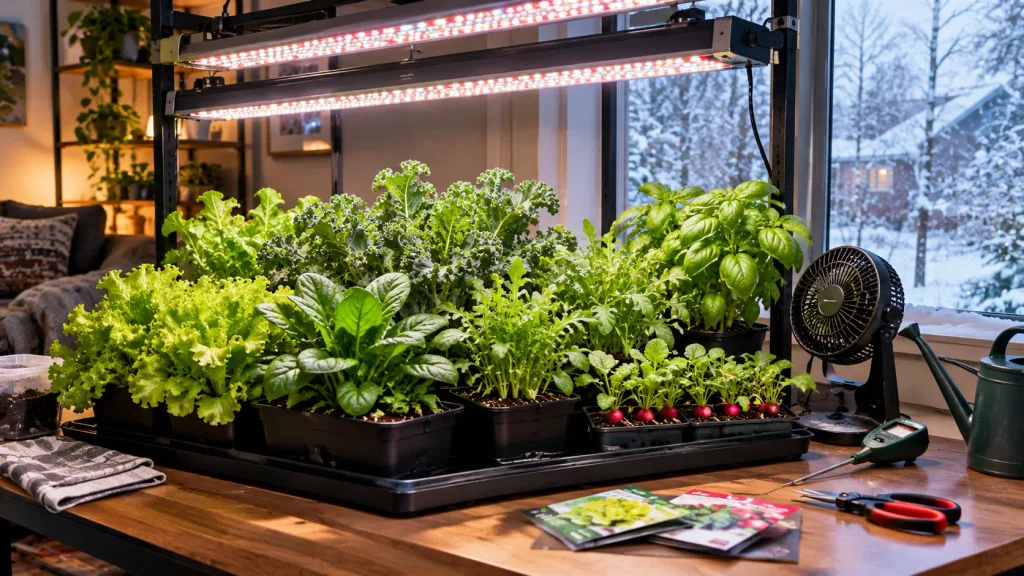
Light is the single factor that decides what you can grow. A south-facing window gives leafy greens and herbs enough light on its own in many climates, but a basic LED or fluorescent shop light removes the guesswork and works from any window direction.
- Leafy greens and herbs: Need moderate light, often described as cooler-toned bulbs in the 5,000 to 6,500K range, for around 10 to 12 hours a day.
- Fruiting crops (tomatoes, peppers, cucumbers): Need much stronger light, typically requiring a dedicated grow light rated for fruiting plants, running 14 to 16 hours a day.
Keep lights close to seedlings, usually just a few inches above the leaves, and raise them as plants grow so they don’t scorch the foliage.
Temperature and Humidity
Most indoor vegetables do well at standard indoor temperatures, generally 65 to 75°F. Leafy greens tolerate the cooler end of that range; fruiting crops want the warmer end and struggle to set fruit below 60°F at night.
Winter heating dries indoor air, which actually helps prevent fungal problems like damping-off in young seedlings. Keep an eye on soil moisture rather than relying on how humid the room feels, since dry heated air can pull moisture from soil faster than expected.
Containers and Potting Mix
Food crops need better drainage and more root room than most houseplants. A few starting points:
- Leafy greens: 6-inch containers with drainage holes are enough.
- Herbs: 6 to 8-inch pots work for most varieties.
- Root vegetables: Look for containers at least 8 to 10 inches deep.
- Dwarf tomatoes and peppers: Use a 5-gallon container or larger.
Use a fresh potting mix rather than garden soil, which compacts in containers and drains poorly indoors.
Where to Put Your Indoor Garden
Room choice affects your results almost as much as the equipment does. A kitchen or living room with a south-facing window gives the most natural light and the most stable temperature, since these rooms usually stay heated all day.
A basement or spare room can also work well, especially for fruiting crops, since a dedicated grow light replaces the need for a window entirely. The tradeoff is temperature: unheated basements often run below 65°F in winter, which slows leafy greens and can stop fruit set in tomatoes and peppers. If you’re using a cooler room, a small space heater on a thermostat plug keeps the growing area in range without heating the whole house.
Avoid spots near drafty windows or exterior doors. Cold drafts stress seedlings the same way a sudden outdoor frost would, even if the room itself reads a comfortable temperature a few feet away.
Keeping a Steady Harvest Going
One planting of lettuce or spinach doesn’t last all winter. Sow a new small tray or pot every 2 to 3 weeks so a fresh batch is always a few weeks behind the one you’re currently harvesting. This succession approach works for arugula, lettuce, radishes, and microgreens, and it turns one big harvest into a steady supply instead.
Herbs don’t need this same rotation since regular trimming keeps the same plant productive for months. Snip from the top of the plant rather than stripping whole stems, and it grows back fuller instead of leggy.
Best Vegetables to Grow Indoors in Winter
Fast Leafy Greens
Leafy greens are the easiest entry point and the fastest reward. They tolerate lower light than fruiting crops and don’t need pollination at all.
| Vegetable | Days to Harvest | Light Needed | Notes |
| Arugula | 20-30 days | Moderate | Fastest green on this list |
| Spinach | 25-40 days | Moderate | Prefers cooler room temps |
| Loose-leaf lettuce | 30-40 days | Moderate | Harvest outer leaves, plant keeps producing |
| Kale | 30-50 days | Moderate | Tolerant of low light and cool rooms |
Sow seeds a quarter-inch deep, keep soil moist but not soggy, and cut outer leaves instead of pulling the whole plant so it keeps producing for weeks.
Herbs and Microgreens
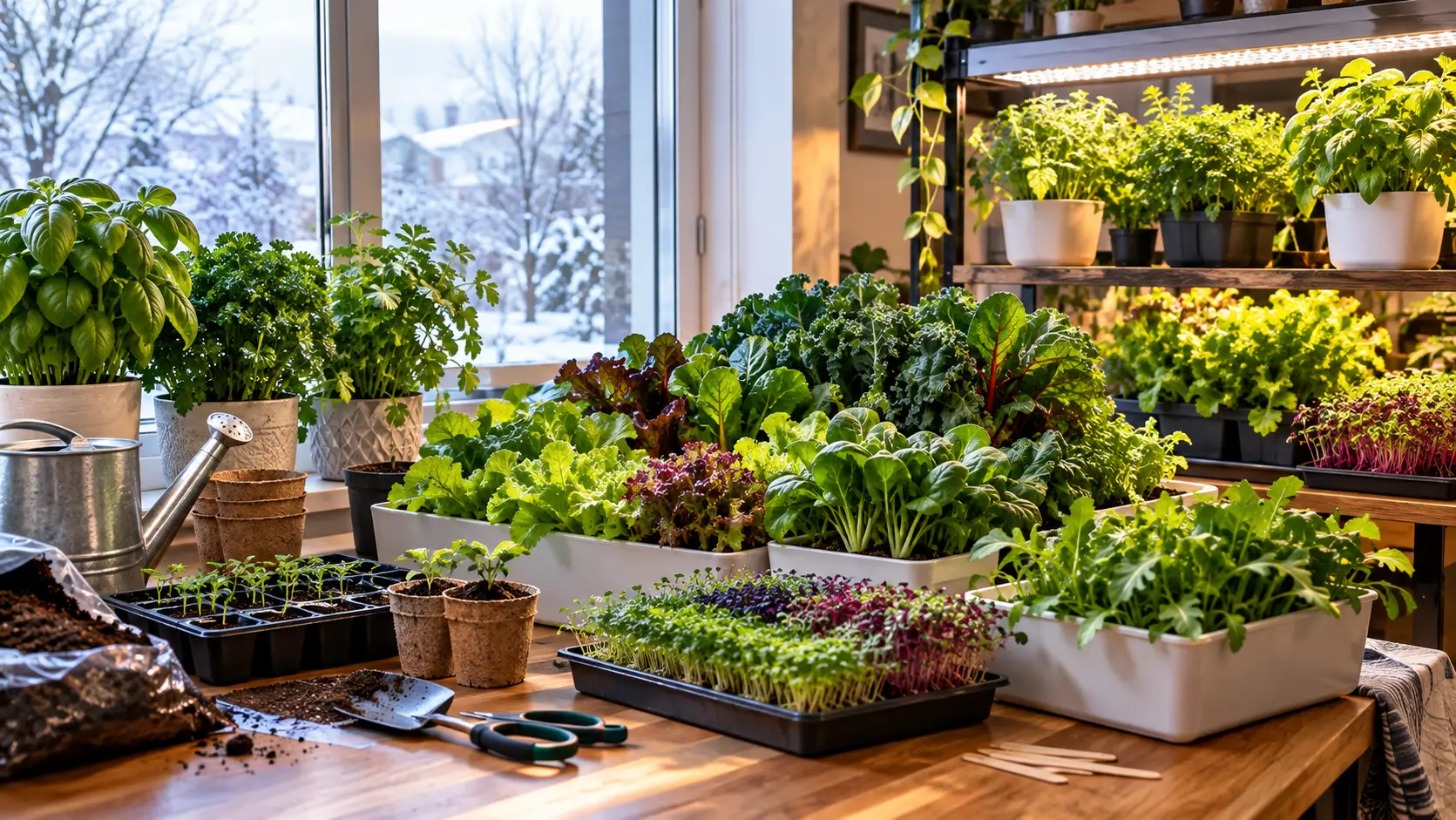
Herbs need only a few hours of light on a bright windowsill, and microgreens are ready faster than almost anything else you can grow.
- Basil, parsley, chives, cilantro, thyme: All grow well in 6 to 8-inch pots under a basic grow light or in a sunny window.
- Microgreens: Ready in 10 to 14 days from a shallow tray, no grow light strictly required if the room gets decent daylight.
Root Vegetables
Root vegetables take more patience indoors than greens, but compact varieties do fine in deep containers under a grow light.
- Radishes: Fast enough to fit the same timeline as leafy greens.
- Carrots and beets: Choose compact or short-rooted varieties for containers under 10 inches deep. These need 12 to 16 hours of daily light to size up properly.
Fruiting Crops
Tomatoes, peppers, and cucumbers are possible indoors, but they ask for more from you than any other category here.
- Light: These crops need high-output lighting, often in the 600-900 µmol·m⁻²·s⁻¹ range, for 14 to 16 hours a day. A weak windowsill isn’t enough.
- Temperature: Daytime temperatures between 70 and 80°F and nights between 60 and 70°F give the best fruit set. Below 50°F or above 90°F, flowers drop without setting fruit.
- Varieties: Dwarf types bred for containers, such as Tiny Tim, Patio, or Small Fry tomatoes, are far more realistic indoors than full-size varieties.
- Pollination: Required by hand, since there’s no wind or insects indoors (details below).
Given the light and temperature demands, many indoor growers start these crops in late winter rather than the depths of December or January, when day length is shortest.

Hand Pollination for Fruiting Crops
Tomatoes, peppers, and cucumbers rely on wind or insects outdoors to move pollen between flowers. Indoors, that job falls to you.
- Wait until flowers are fully open, usually in the late morning.
- Use a small, soft paintbrush, cotton swab, or your fingertip to touch the center of each flower, transferring pollen between blossoms or within the same flower.
- Repeat every day or two while the plant is flowering, since new blossoms open continuously.
- A gentle daily shake of the whole plant works as a simpler alternative for tomatoes, which are mostly self-fertile.
Running a small fan nearby for a few hours a day also helps. It mimics the light breeze that assists pollination outdoors and strengthens stems at the same time.
Watering and Feeding
Check soil moisture 1 to 2 inches deep rather than judging by the surface, which dries out faster indoors than the root zone does. Water at the base of the plant in the morning when possible.
Since container soil holds a limited nutrient supply, feed leafy greens and herbs every 2 to 4 weeks with a diluted liquid fertilizer, and feed fruiting crops more consistently once they start flowering. Too much nitrogen fertilizer on tomatoes and peppers pushes leaf growth at the expense of flowers and fruit, so don’t overcorrect if fruit set seems slow.
Air Circulation and Pest Prevention
Still air indoors raises the risk of powdery mildew and weak, floppy stems. A small oscillating fan on low, running a few hours a day, fixes both problems and helps with pollination for fruiting crops.
Overwatering is the most common invitation for indoor pests like fungus gnats, since damp soil is exactly what they need to breed. If you spot small flies around the soil surface, let the top inch or two dry out between waterings before treating for anything else. Aphids and whiteflies, when they show up, usually respond to a firm spray of water directed at the undersides of leaves.
Common Mistakes When Growing Vegetables Indoors in Winter
Relying on a windowsill alone for fruiting crops. Tomatoes and peppers need far more light than a window provides in December or January. Without a dedicated grow light, expect leggy plants and few, if any, fruit.
Skipping hand pollination. Flowers that open and close without help simply drop off. If you’re growing tomatoes or peppers indoors, pollination isn’t optional.
Watering on a schedule instead of checking the soil. Heated indoor air changes how fast soil dries out week to week. Check before you water rather than watering the same amount every few days.
Choosing full-size varieties. Standard tomato and pepper varieties bred for outdoor gardens rarely perform well in a container indoors. Dwarf and patio varieties are bred specifically for this kind of limited space and light.
Ignoring airflow. A closed, still room raises humidity around the leaves and invites mildew. A cheap desk fan on low solves this in most small setups.
Windowsill Setup vs. Grow Light Setup
| Factor | Windowsill Only | Grow Light Setup |
| Best crops | Herbs, microgreens, some leafy greens | Leafy greens, root vegetables, fruiting crops |
| Startup cost | Minimal | $20-$40 for basic LED; more for fruiting crops |
| Daily light hours | Depends on window direction and season | Controlled, typically 10-16 hours |
| Fruiting crops realistic? | Rarely | Yes, with high-output lighting |
| Best for | First-time indoor growers | Anyone wanting reliable, year-round harvests |
Final Thoughts
Start with leafy greens, herbs, or microgreens if you’re new to growing vegetables indoors in winter; they need less light, no pollination, and give you a harvest within weeks. Add a basic LED grow light once you want more reliable results or plan to try root vegetables. Save tomatoes and peppers for once you have a light strong enough to support them, along with the patience for hand pollination and steady warmth through the darkest months.
FAQs
What vegetables grow best indoors in winter? Leafy greens like lettuce, spinach, arugula, and kale are the easiest, since they need less light and no pollination. Herbs and microgreens are just as simple. Dwarf tomatoes and peppers are possible but need a stronger grow light and hand pollination.
Do I need a grow light to grow vegetables indoors in winter? Not always. A south-facing window can support herbs, microgreens, and some leafy greens. Fruiting crops like tomatoes and peppers need a dedicated grow light, since window light rarely provides the 14 to 16 hours of strong light they need.
Can I grow tomatoes or peppers indoors without a greenhouse? Yes, but it takes more setup than greens do. You’ll need a high-output LED grow light, daytime temperatures around 70 to 80°F, and daily hand pollination once flowers open.
Why aren’t my indoor tomato or pepper flowers turning into fruit? This usually comes down to pollination, temperature, or both. Flowers that open and close without pollen transfer simply drop, and temperatures below 50°F or above 90°F stop pollination from working even if you pollinate by hand.
How often should I water indoor vegetables in winter? Check the soil 1 to 2 inches deep before watering rather than following a fixed schedule. Heated indoor air dries soil faster than expected, but overwatering also invites pests like fungus gnats.
Is it cheaper to grow microgreens or full-size vegetables indoors? Microgreens cost less to start and are ready in 10 to 14 days from a shallow tray, with no grow light strictly required. Full-size crops like tomatoes take longer, cost more in equipment, and need ongoing care through the whole season.