

Quick Answer
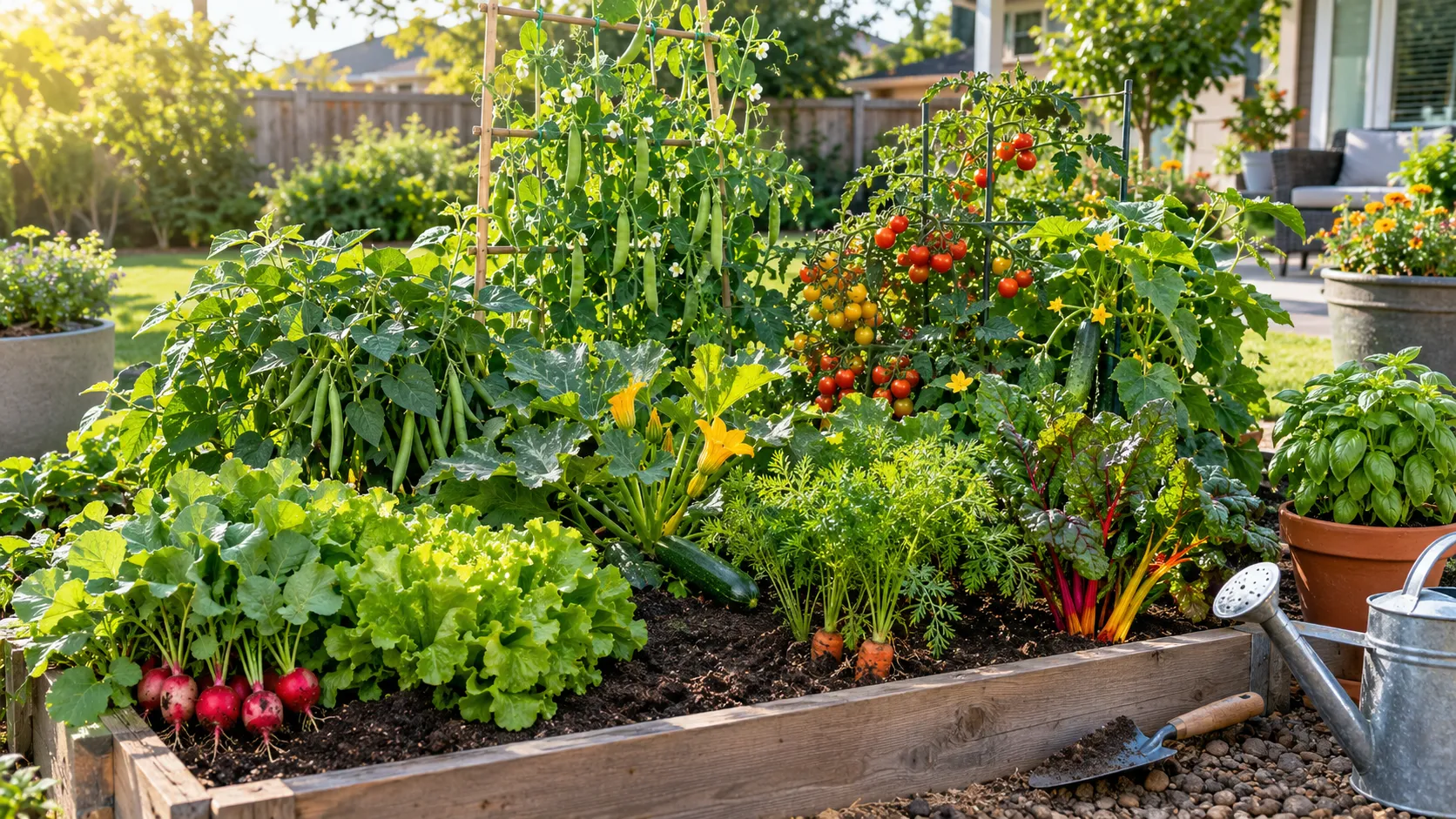
The best vegetables for beginners grow fast, tolerate mistakes, and need little space. Radishes, lettuce, green beans, peas, zucchini, and cherry tomatoes top the list. These crops handle uneven watering, work in containers or small beds, and give you a harvest in weeks instead of months. Start with 3 or 4 of these, give them 6 to 8 hours of sun and loose, compost-fed soil, and you’ll have fresh food on your plate before summer ends.
You don’t need a big yard or years of practice to grow your own food. The best vegetables for beginners share a few traits: short growing times, tolerance for imperfect soil, and forgiveness when you forget to water for a day. Pick the wrong crops first (celery, full-size cauliflower, or large tomatoes) and you’ll spend a summer troubleshooting instead of eating.
This guide draws on spacing and timing data from university extension services (UConn, Michigan State) along with practical guidance from experienced home gardeners. It covers not just which vegetables to plant, but how deep, how far apart, when, and what tends to go wrong with each one.
What Actually Makes a Vegetable “Beginner-Friendly”
Four things separate an easy crop from a hard one:
- Days to harvest. Anything under 60 days lets you see results, fix mistakes, and try again in the same season.
- Feeding needs. Light feeders (beans, peas, radishes, carrots) do fine in average soil. Heavy feeders (tomatoes, squash, lettuce) need compost-rich soil to perform.
- Water tolerance. Some crops sulk after one dry day. Others, like chard and zucchini, forgive a missed watering.
- Pest pressure. Squash bugs, tomato hornworms, and cabbage worms are common problems for certain crops. Radishes and beans see far fewer pest issues.
Keep these four factors in mind and the rest of this guide will make more sense.
The 10 Best Vegetables for Beginners
1. Radishes
Radishes are the fastest payoff in vegetable gardening. Sow seeds directly in soil, thin seedlings to about 2 inches apart, and you’ll pull mature roots in 3 to 5 weeks.
- Spacing: 1-2 inches between plants, 10-12 inches between rows.
- Soil and feeding: Light feeder. Loose, well-drained soil matters more than fertilizer.
- Container depth: 6-8 inches is enough.
- Common problem: Roots turn woody or “pithy” if left in the ground too long after maturing, or if the soil dries out and rewets unevenly.
- Tip: Plant a new short row every 2 weeks for a steady supply instead of one big harvest all at once.
2. Lettuce
Lettuce grows in a matter of weeks and you can cut leaves multiple times from the same plant. It tolerates partial shade better than most vegetables, which helps if your yard doesn’t get full sun all day.
- Spacing: Loose-leaf types need 6-8 inches between plants; head lettuce needs 10-12 inches.
- Soil and feeding: Heavy feeder, so mix compost into the bed before planting.
- Container depth: 6-8 inches.
- Common problem: Bolting (sending up a flower stalk and turning bitter) in hot weather. Plant in early spring or fall, not the middle of summer.
- Tip: Loose-leaf varieties like Black Seeded Simmons or a mesclun mix are easier for a first try than tight head lettuce.
3. Green Beans
Bush beans need no staking, no trellis, and no special training. Seeds go straight into the ground after your last frost date, and you’ll see beans in 7 to 9 weeks.
- Spacing: 3-6 inches between plants, 18-24 inches between rows.
- Soil and feeding: Light feeder. Beans fix their own nitrogen, so skip heavy fertilizing.
- Container depth: 8-12 inches, in a container at least 12 inches wide.
- Common problem: Bean beetles chewing lacy holes in leaves. Hand-picking works for small gardens.
- Tip: Pick pods every 2 to 3 days once they start; beans left on the vine too long turn tough and slow down new production.
4. Peas
Peas grow in cool spring weather, before most other vegetables even go in the ground. Give them a simple trellis or fence to climb and they’ll produce for several weeks.
- Spacing: 2-3 inches between plants, 18-24 inches between rows (closer on a trellis).
- Soil and feeding: Light feeder, similar to beans.
- Container depth: 8-10 inches, with something for vines to climb.
- Common problem: Peas stop producing once daytime temperatures push past 80°F. Plant early enough to finish before the heat arrives.
- Tip: Snap peas and snow peas are both easy, and both taste noticeably better fresh than anything from a store.
5. Zucchini
One zucchini plant can produce well over what most households eat in a season. It needs full sun and steady water, but forgives soil that isn’t perfect.
- Spacing: 24-36 inches between plants; this crop spreads wide.
- Soil and feeding: Heavy feeder. Mix in compost and consider a balanced fertilizer partway through the season.
- Container depth: 12 inches minimum, in a large pot or grow bag.
- Common problem: Squash bugs and squash vine borers. Check under leaves weekly and remove any orange egg clusters you find.
- Tip: Plant just 1 or 2 plants. This crop is famous for producing more than most gardeners know what to do with.
6. Cherry Tomatoes
Full-size tomatoes take patience and staking. Cherry tomatoes are smaller, ripen faster, and produce over a longer window, which makes them a better starting point.
- Spacing: 18-24 inches between plants if caged, more if left to sprawl.
- Soil and feeding: Heavy feeder. Tomatoes want deep, rich soil and consistent watering.
- Container depth: 12-16 inches, in a container of at least 5 gallons.
- Common problem: Blossom end rot, a dark leathery patch on the fruit bottom, usually caused by inconsistent watering rather than a soil deficiency.
- Tip: Sungold and Sweet 100 are reliable first choices. A single plant in a large container can supply fruit all summer.
7. Cucumbers
Cucumbers grow quickly once the weather warms, often producing fruit within 2 months of planting. A trellis keeps the vine off the ground and cuts down on rot and disease.
- Spacing: 12-18 inches on a trellis, 24-36 inches if left to sprawl on the ground.
- Soil and feeding: Heavy feeder, similar to squash.
- Container depth: 8-10 inches, deeper if the pot is small in diameter.
- Common problem: Powdery mildew on leaves late in the season. Water at the base of the plant, not overhead, to reduce this.
- Tip: Bush varieties take up far less room than vining types and work well in containers.
8. Carrots
Carrots need loose, rock-free soil more than any other crop on this list, but once that’s sorted, they’re low-maintenance. They mature in 2 to 3 months and store well after harvest.
- Spacing: 2-3 inches between plants after thinning, 12-18 inches between rows.
- Soil and feeding: Light feeder. Fresh manure or heavy fertilizer causes forked, misshapen roots.
- Container depth: At least 10-12 inches for full-size varieties; shorter round varieties work in 8 inches.
- Common problem: Seeds are slow to germinate and easy to overcrowd. Thin seedlings early so remaining roots have room to grow straight.
- Tip: Keep the top inch of soil consistently damp until seeds sprout, which can take 1 to 3 weeks.
9. Swiss Chard
Swiss chard tolerates both heat and cold better than spinach or lettuce, and one planting can keep producing leaves for months. It grows well in both cool and warm weather, unlike most greens.
- Spacing: 8-12 inches between plants.
- Soil and feeding: Heavy feeder, so give it compost-rich soil.
- Container depth: 8-12 inches.
- Common problem: Leaf miners, which tunnel through leaves. Remove and discard affected leaves as soon as you spot them.
- Tip: Cut outer leaves and let the plant keep growing from the center, rather than pulling the whole plant.
10. Basil and Other Herbs
Herbs aren’t technically vegetables, but no beginner list is complete without them. Basil, parsley, and chives grow well in small pots, need little care, and give you something useful within weeks.
- Spacing: 12-18 inches for basil; other herbs can go closer.
- Soil and feeding: Moderate feeder. Basil especially likes warm soil and consistent moisture.
- Container depth: 8-10 inches.
- Common problem: Basil bolts and turns bitter once it flowers in hot weather. Pinch off flower buds as soon as they appear.
- Tip: Snip regularly, taking leaves from the top, and the plant grows back bushier instead of leggy.
Quick Comparison Table
| Vegetable | Difficulty | Days to Harvest | Feeder Type | Sun Needed | Container Depth |
| Radish | Very easy | 21-35 days | Light | Full sun | 6-8 in |
| Lettuce | Easy | 30-45 days | Heavy | Sun or part shade | 6-8 in |
| Green beans | Easy | 50-60 days | Light | Full sun | 8-12 in |
| Peas | Easy | 55-70 days | Light | Full sun | 8-10 in |
| Zucchini | Easy | 50-65 days | Heavy | Full sun | 12+ in |
| Cherry tomatoes | Easy | 60-70 days | Heavy | Full sun | 12-16 in |
| Cucumber | Easy | 55-65 days | Heavy | Full sun | 8-10 in |
| Carrot | Moderate | 60-80 days | Light | Sun or part shade | 10-12 in |
| Swiss chard | Easy | 50-60 days | Heavy | Sun or part shade | 8-12 in |
| Basil | Very easy | 30-45 days | Moderate | Full sun | 8-10 in |
Cool-Season vs. Warm-Season Crops
Timing matters as much as vegetable choice. Cool-season crops grow best in the mild temperatures of early spring and fall: peas, lettuce, radishes, carrots, and Swiss chard all fall into this group. Warm-season crops need heat and won’t tolerate frost: beans, cucumbers, zucchini, and tomatoes belong here.
Planting a cool-season crop in the middle of summer, or a warm-season crop before your last frost date, is one of the most common reasons beginner crops fail. Check your local frost dates before you plant anything.

Vegetables to Save for Later
A few crops trip up new gardeners more than others. None of these are impossible, but they demand more precision than a first-year garden usually delivers.
- Celery. It needs constant moisture over a long season (28-inch row spacing and heavy feeding). Dry soil for even a day or two stunts it.
- Broccoli and cauliflower. Both need exact timing around temperature and 80-100+ days to mature. Plant too late and they bolt before forming a head.
- Brussels sprouts. They need 3 to 4 months and cool fall weather to develop good flavor.
- Full-size tomatoes. Larger fruit means more staking, more pruning, and more sensitivity to inconsistent watering than cherry types.
- Spinach. It bolts fast in warm weather, so timing has to be exact. Swiss chard is a more forgiving substitute with a similar taste.
Soil Basics You Can’t Skip
Good soil matters more than any other single factor. Vegetables listed as “heavy feeders” (lettuce, tomatoes, cucumbers, squash, chard) pull a lot of nutrients from the soil and need it replenished with compost each season. “Light feeders” (beans, peas, carrots, radishes) do fine in average soil and can even follow heavy feeders in a rotation.
Before planting anything, mix 2 to 3 inches of compost into the top 6 to 8 inches of soil. If you’re using a raised bed or containers, a bagged vegetable garden soil mix works fine straight out of the bag. Avoid planting directly into compacted native soil without amending it first; roots can’t push through hard-packed dirt, and drainage suffers.
Spacing: Why It Matters More Than It Seems
Seed packets list exact spacing for a reason tied directly to airflow and nutrient competition. Crowd radishes to less than an inch apart and roots stay thin. Crowd tomatoes and humidity between leaves invites fungal disease. Crowd carrots and roots fork around each other instead of growing straight down.
When in doubt, follow the wider end of the spacing range on the seed packet, not the narrower one. A garden with fewer, well-spaced plants almost always outproduces a crowded one.
Common Mistakes First-Time Gardeners Make
Most garden failures come down to a handful of avoidable habits.
Planting too much at once. A 4×4 raised bed with 5 or 6 crops teaches you more than a 20×20 plot that becomes overwhelming by July.
Skipping the sun check. Watch your planned spot for a full day before you plant. Most vegetables need 6 to 8 hours of direct sun; a shady corner produces weak, leggy plants no matter how good your soil is.
Overcrowding. Seed packets list spacing for a reason. Crowded plants compete for light and water, and poor airflow between them raises the risk of fungal disease.
Ignoring soil. Digging seeds into compacted dirt sets you up to fail before you start. Mix in compost before planting, even in a small bed.
Watering on a fixed schedule instead of checking the soil. Stick a finger 2 inches into the dirt. If it’s dry, water. If it’s damp, wait a day.
Planting warm-season crops too early. Tomatoes, beans, cucumbers, and zucchini all get stunted by cold soil and late frost. Wait until nighttime temperatures stay above 50°F.
Not thinning seedlings. Carrots, radishes, and lettuce all get sown thicker than they should grow. Pull extra seedlings early so the ones left behind have room.
Seeds vs. Transplants
Fast, direct-sow crops like radishes, beans, peas, lettuce, and carrots do best sown right into the soil; their roots don’t like being disturbed by transplanting. Slow starters like tomatoes, peppers, and eggplant are usually easier to buy as young transplants from a nursery, since starting them from seed indoors requires 6 to 8 weeks of lead time and consistent light.
If you do start seeds indoors, harden off transplants before moving them outside permanently. This means setting them outdoors for a few hours a day, gradually increasing exposure to sun and wind over about a week, so the shock of the move doesn’t set them back.
How to Set Up Your First Garden
- Pick a sunny, well-drained spot. Avoid areas where water pools after rain.
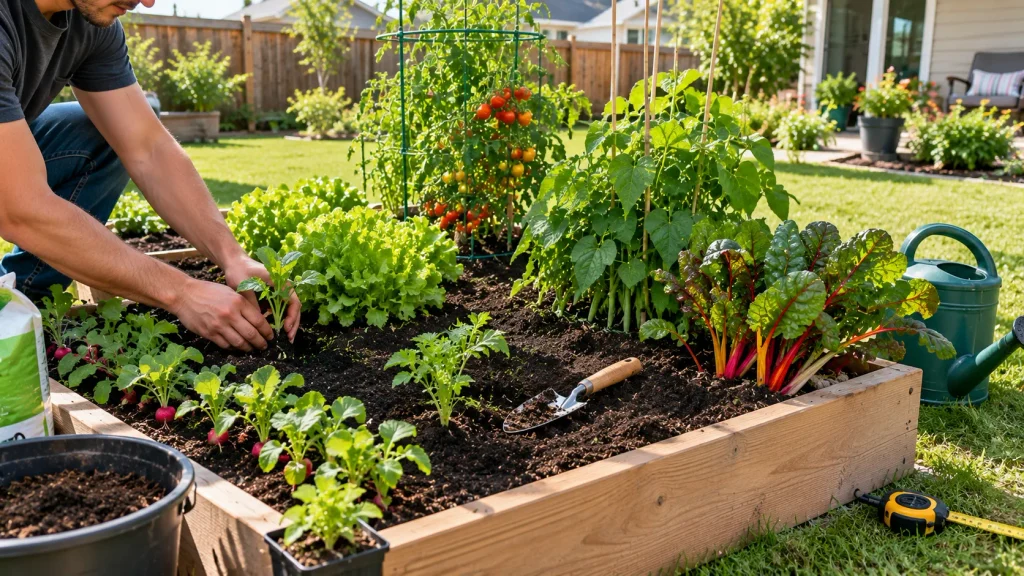
- Start small. A single 4×4 or 4×8 raised bed, or a handful of large containers, is enough for your first season.
- Improve the soil before planting. Mix in compost, even in a small area.
- Choose 3 to 5 crops from the list above, not 15, and check whether each is a cool-season or warm-season crop.
- Space plants at the wide end of the seed packet’s recommended range.
- Water at the base of the plant, in the morning, so leaves dry before evening. This cuts down on fungal disease.
- Check on your garden daily. Catching a pest or a wilting leaf early is far easier than fixing it after a week.
Final Thoughts
Start with 3 or 4 crops from this list, match them to the right season, give them consistent sun and water, and space them at the wider end of the recommended range. The best vegetables for beginners aren’t the ones that impress anyone. They’re the ones that grow despite a missed watering day or soil that isn’t perfect yet. Get a few small wins this season, and you’ll have the confidence and the know-how to grow almost anything next year.
FAQs
What is the easiest vegetable to grow for a complete beginner?
Radishes are usually the easiest. They germinate fast, need no special care, and go from seed to harvest in about a month.
Can I grow vegetables without a yard?
Yes. Radishes, lettuce, cherry tomatoes, basil, and bush beans all grow well in containers on a balcony or patio, as long as they get enough sun and the container is deep enough for the crop’s root system.
How much sun do beginner vegetables actually need?
Most need 6 to 8 hours of direct sunlight a day. Lettuce, chard, and carrots tolerate a few hours of shade better than tomatoes, zucchini, or beans.
Should I start from seed or buy young plants?
Fast crops like radishes, beans, peas, lettuce, and carrots do well from seed sown right in the soil. Tomatoes, peppers, and other slow starters are often easier to buy as small transplants from a nursery.
How do I know if I’m overwatering or underwatering?
Check the soil, not the calendar. If the top 2 inches feel dry, water. Yellowing leaves often mean too much water; crisp, wilted leaves usually mean too little.
What’s the difference between a light feeder and a heavy feeder?
Heavy feeders like tomatoes, lettuce, cucumbers, and squash pull a lot of nutrients from soil and need compost or fertilizer through the season. Light feeders like beans, peas, carrots, and radishes grow fine in average soil without extra feeding.
Do I need to rotate crops in a small garden?
It helps, even in a small bed. Follow a heavy feeder like tomatoes with a light feeder like beans the next season, since beans add nitrogen back to the soil that tomatoes used up.
When should I plant cool-season crops versus warm-season crops?
Cool-season crops (peas, lettuce, radishes, carrots, chard) go in as soon as soil can be worked in early spring, and again in late summer for a fall crop. Warm-season crops (tomatoes, beans, cucumbers, zucchini) go in after your last frost date, once nights stay above 50°F.